Dual-Purpose Chicken Breeds: Eggs and Meat Guide
Dual-Purpose Chicken Breeds: Eggs and Meat Guide
Hatchery catalogs almost always sort their birds into three groups: production layers, fast-growing broilers, and dual-purpose chicken breeds. That third group is where the majority of backyard flocks end up, partly because it sounds like the sensible middle road and partly because those breeds happen to be the calm, hardy, good-looking birds people picture when they imagine chickens in a yard. What the label actually promises, though, is rarely spelled out.
The short version is that a dual-purpose bird carries enough meat on its frame to be worth butchering while still laying at a rate that justifies feeding it through the winter. It is a compromise by design. A bird built this way will not out-lay a Leghorn or a commercial sex-link, and it will never approach the eight-week turnaround of a Cornish Cross. What it does offer is flexibility, longevity, and a flock that makes sense on a small piece of land where every animal needs to earn its keep in more than one way.
This guide digs into how these breeds are actually built, what the numbers look like when you compare the common options side by side, where hatchery stock and heritage lines diverge, and the practical realities — cockerel management, processing timelines, feed costs — that decide whether a dual-purpose flock works out or quietly becomes an expensive lawn ornament.
What "Dual-Purpose" Really Means on a Backyard Scale
Before the broiler industry reorganized poultry production in the mid-twentieth century, nearly every farm flock was dual-purpose by necessity. Hens laid the eggs, surplus cockerels went into the pot, and old hens finished their careers as stewing birds. Breeds were selected to do both jobs adequately rather than either job spectacularly. The specialization that followed — hybrids bred purely for eggs on one side, purely for rapid weight gain on the other — is what created the category we now call dual-purpose in the first place.
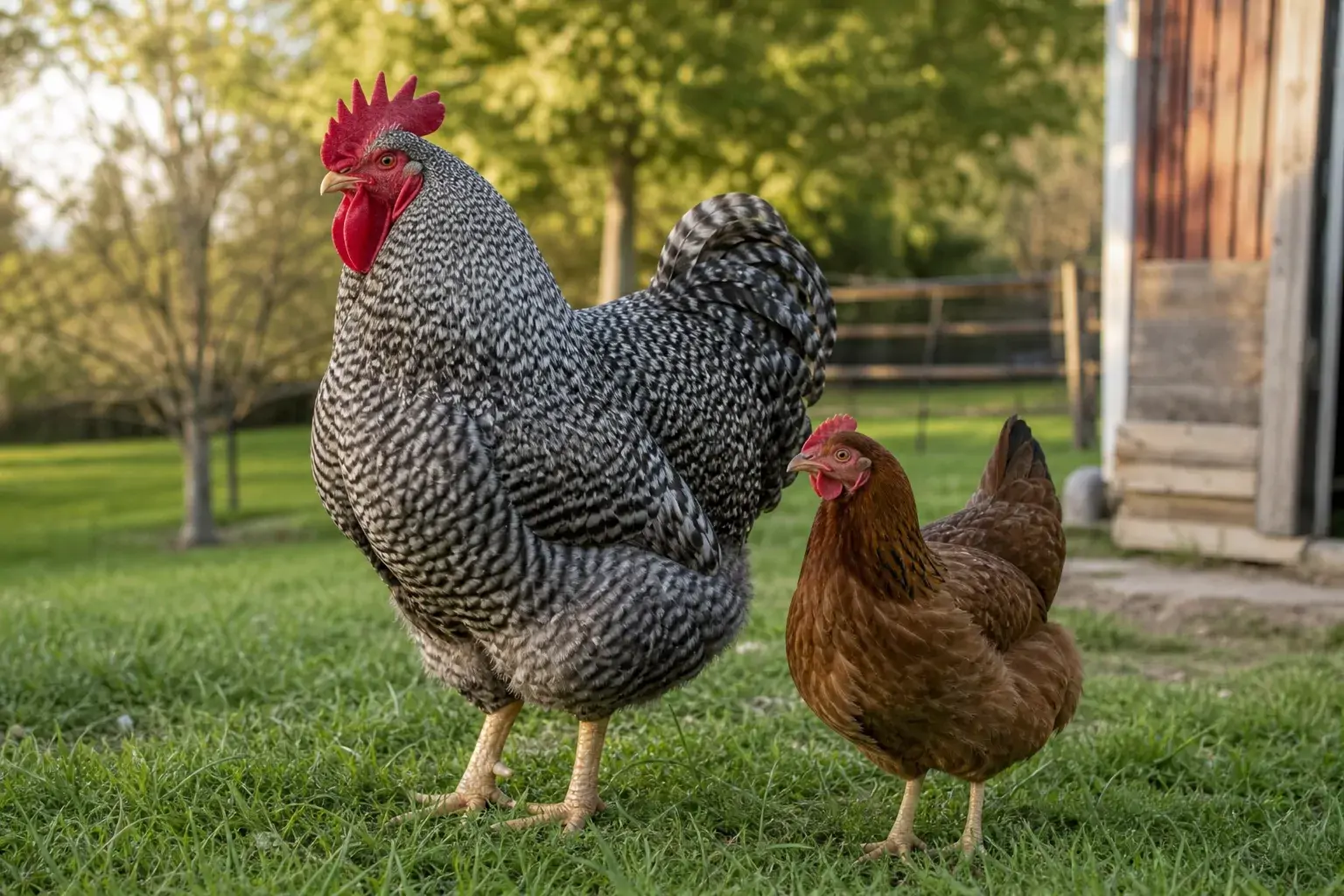
Physically, these birds share a recognizable build: a deep, wide body, a broad breast relative to laying breeds, substantial thigh and leg meat, and a mature weight that typically lands between 6 and 8 pounds for hens and 8 to 10 pounds for cockerels. They tend to be heavily feathered, which is why so many of the classic dual purpose chicken breeds also appear on lists of cold hardy chicken breeds. That same insulation becomes a liability in the Deep South, where lighter-bodied heat tolerant chickens usually cope better through August.
Why Growth Rate Matters More Than Final Weight
New keepers often compare breeds by mature weight alone, which is the wrong number to fixate on. A Jersey Giant rooster may top 13 pounds eventually, but it can take him the better part of a year to get there. What matters for meat purposes is how much usable carcass a bird puts on by the time you actually want to process it — usually somewhere between 16 and 22 weeks for a dual-purpose cockerel.
At that age, a well-grown cockerel from a good line typically dresses out somewhere in the 3 to 4 pound range. Compare that to a Cornish Cross hitting a similar dressed weight at seven or eight weeks on roughly half the feed, and the gap in feed conversion efficiency becomes obvious. Broilers convert somewhere near two pounds of feed per pound of gain; a dual-purpose cockerel eating for four or five months may need double that or more. Nobody raises heritage-type meat birds because it is cheaper. They raise them because the birds forage, reproduce naturally, tolerate outdoor life, and produce firmer, more flavorful meat that suits slower cooking methods.
The Egg Production Trade-Off
On the laying side, the compromise is real but smaller than people expect. A solid dual-purpose hen from a productive strain will lay somewhere between 200 and 260 eggs in her first year. A commercial-style hybrid might reach 300. That difference — roughly one extra egg every five or six days — matters enormously on a commercial scale and very little in a backyard where six hens already outproduce what a family eats.
Where the gap widens is in feed consumed per egg. A heavier hen burns more calories simply maintaining her body, so dual purpose layers eat more for the same output. The offsetting advantage is durability: heavy breeds frequently keep laying respectably in their second and third years, while high-output hybrids often burn brightly and then taper hard. Anyone comparing options against lists of the best egg laying chicken breeds should weigh lifetime production, not just first-year peak.
Takeaway: Dual-purpose means adequate at both jobs and exceptional at neither — the value is in versatility, hardiness, and staying power rather than raw numbers.
Comparing the Most Common Dual-Purpose Breeds
The figures below are typical ranges reported by hatcheries and breed associations, not guarantees. Strain matters more than breed name, and management — feed quality, light, parasite control, weather — easily swings production by 20 percent in either direction. Use this the way you would use any chicken breed comparison chart: as a starting shortlist, not a verdict.
| Breed | Eggs per year (approx.) | Hen weight | Rooster weight | Standout trait |
|---|---|---|---|---|
| Rhode Island Red | 200–280 | 6.5 lb | 8.5 lb | Highest laying output of the classic heavies |
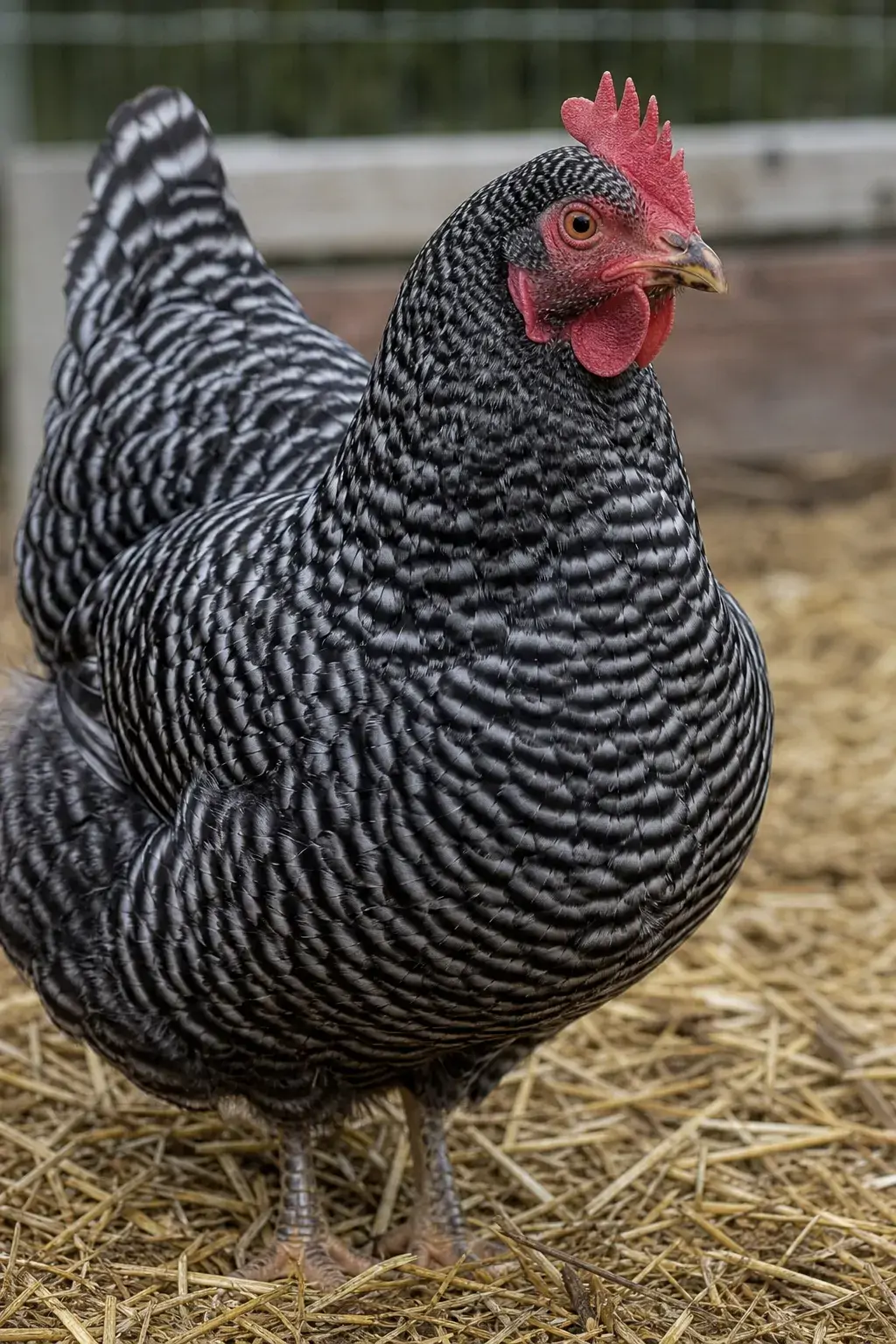
| Plymouth Rock (Barred) | 200–250 | 7.5 lb | 9.5 lb | Balanced frame, calm, widely available |
| Australorp | 220–280 | 6.5 lb | 8.5 lb | Exceptional layer, quiet temperament |
| Wyandotte | 180–220 | 6.5 lb | 8.5 lb | Rose comb, excellent winter hardiness |
| Orpington | 150–200 | 8 lb | 10 lb | Heavy carcass, docile, frequently broody |
| Sussex | 200–250 | 7 lb | 9 lb | Strong forager, good winter laying |
| New Hampshire | 180–240 | 6.5 lb | 8.5 lb | Fastest early growth of the standard breeds |
| Delaware | 200–250 | 6.5 lb | 8.5 lb | Broad breast, quick feathering |
| Buckeye | 150–200 | 6.5 lb | 9 lb | Active forager, rare American breed |
| Jersey Giant | 150–200 | 10 lb | 13 lb | Largest frame, slowest to mature |
Reading down that table, a pattern emerges. The breeds developed with commercial farm flocks in mind — Rhode Island Red, New Hampshire, Delaware, Australorp — lean toward the egg side and grow reasonably fast. The heavier, fluffier breeds trade eggs for bulk and disposition. The Rhode Island Red chicken remains the benchmark for a reason: production strains lay nearly as well as dedicated layers while still leaving a usable carcass, though some hatchery lines have drifted lighter over the decades.
Temperament deserves as much weight as production. Buff Orpington chickens are routinely recommended to families with small children precisely because they are slow, tolerant, and easy to handle, and that same placidity makes them poor foragers who expect their feed delivered. Buckeyes and Sussex sit at the opposite end — busy, alert, genuinely useful on pasture, and correspondingly less interested in sitting on a lap. If your flock free-ranges, foraging drive translates directly into lower feed bills.
Heritage Lines vs. Hatchery Stock
Two birds sold under the same breed name can behave like different animals. The phrase heritage breed dual purpose is used loosely in marketing, but in conservation circles it carries specific requirements: a breed recognized by the American Poultry Association, capable of mating naturally, able to live a long and productive outdoor life, and slow-growing rather than force-bred for early weight.
Practically speaking, birds from a dedicated breeder working toward the standard usually have the deeper, wider bodies the breed was designed around — meaning noticeably more meat at butchering age. Hatchery stock, bred at volume with selection pressure aimed at chick survival and egg numbers, tends to produce lighter, narrower birds that lay well but disappoint on the cutting board. Neither is wrong. If eggs are the priority and the occasional roast is a bonus, hatchery chicks are cheaper and perfectly serviceable. If you intend to hatch replacements and grow cockerels out seriously, sourcing from a breeder changes the math considerably.
Takeaway: Pick the breed for the job you actually need done, then pick the source carefully — the strain behind the name determines whether you get a meat bird that lays or a layer with wide shoulders.
Practical Considerations Before You Commit
Households that want meat and egg chickens from one flock run into a set of logistical questions that pure layer keepers never face. The first is arithmetic: straight-run chicks hatch at roughly a fifty-fifty split, so ordering 20 chicks to raise for meat means planning for about ten cockerels growing loud and pushy in the same space as their sisters. Sexed pullets sidestep this, but then you are buying meat birds separately or hatching your own.
Cockerels begin crowing between 12 and 20 weeks, which is often the exact moment a suburban keeper discovers that the local ordinance permitting hens says nothing kind about roosters. Check the code before the chicks arrive, not after the neighbors do. Grow-out pens also need to be planned in advance — young cockerels start harassing pullets and squabbling with each other well before processing age, and separating them at that point is far easier than improvising a second enclosure in a hurry.
Common Mistakes When Planning a Dual-Purpose Flock
- Waiting too long to process. Cockerels held past roughly 24 weeks develop tougher connective tissue and eat steadily without adding much usable meat. The window between adequate size and declining tenderness is narrower than most people expect.
- Expecting supermarket texture. A 20-week dual-purpose bird is not a roasting chicken in the modern sense. The meat is denser, darker, and far more flavorful, and it rewards braising, slow roasting, or stewing. Treating it like a broiler produces disappointment that gets blamed on the breed.
- Feeding layer ration to growing birds. The calcium level in layer feed is formulated for hens in production, not for developing cockerels. Grow-out birds generally do better on a higher-protein grower or all-flock feed with oyster shell offered separately for the laying hens.
- Assuming the meat is cheap. Between chick cost, four to five months of feed, and bedding, home-raised dual-purpose meat routinely costs more per pound than store chicken. People do it for quality, self-reliance, and control over how the birds live — not savings.
- Ignoring broodiness. Orpingtons, Wyandottes, and Cochin-influenced lines go broody often. That is a gift if you want to hatch replacements without an incubator and a nuisance if you just want eggs in the basket.
Matching the Breed to Your Actual Setup
Climate should narrow the field first. Rose-combed breeds such as Wyandottes and Buckeyes carry less exposed comb tissue in freezing weather, while heavily feathered giants struggle through humid southern summers. Space comes next: heavy breeds are clumsy fliers and stay contained by modest fencing, but they need more square footage per bird in the coop and more roost length than a light Mediterranean breed.
Then consider your appetite for slaughter. This is the part most guides skate past. Raising birds for meat means either learning to process them yourself or locating a small processor willing to take a handful of birds — and in many regions those processors are booked months out or simply do not exist. Anyone browsing beginner chicken breeds with a vague plan to "maybe butcher the extra roosters someday" should settle that question before hatching day, because an unplanned surplus of mature cockerels is one of the most common reasons flocks get rehomed.
Finally, think in terms of a laying cycle rather than a single season. A practical rotation for a small homestead might involve keeping a core group of hens for two or three productive years, hatching or buying replacement chicks each spring, growing the resulting cockerels out over the summer, and processing older hens as they slow down. Handled that way, the flock becomes self-renewing, and the dual-purpose label stops being a marketing term and starts describing how the birds actually function.
Takeaway: The breed choice is the easy part; the harder decisions involve cockerel logistics, processing access, and realistic expectations about cost and texture.
Making the Choice
There is no single best answer, only a best fit. If eggs dominate and meat is occasional, a productive strain of Rhode Island Red, Australorp, or Delaware gives you strong laying with a carcass worth keeping. If you want more substantial birds and a calmer flock, Plymouth Rocks, Sussex, and Orpingtons deliver bulk and temperament at some cost in egg count. If self-sufficiency and pasture performance matter most, the rarer American breeds — Buckeye, Chantecler, Java, Dominique — forage hard and reproduce naturally, with the trade-off of lower output and harder sourcing.
What ties all the dual-purpose chicken breeds together is that they are built for a system, not a single metric. They lay well enough, grow large enough, tolerate real weather, raise their own replacements, and keep working past the age at which specialized hybrids fall off. For a backyard flock meant to last years rather than one production cycle, that combination is usually worth more than the extra dozen eggs a specialist would have laid.