Rhode Island Red Chicken Breed: Complete Guide
Rhode Island Red Chicken Breed: Complete Guide
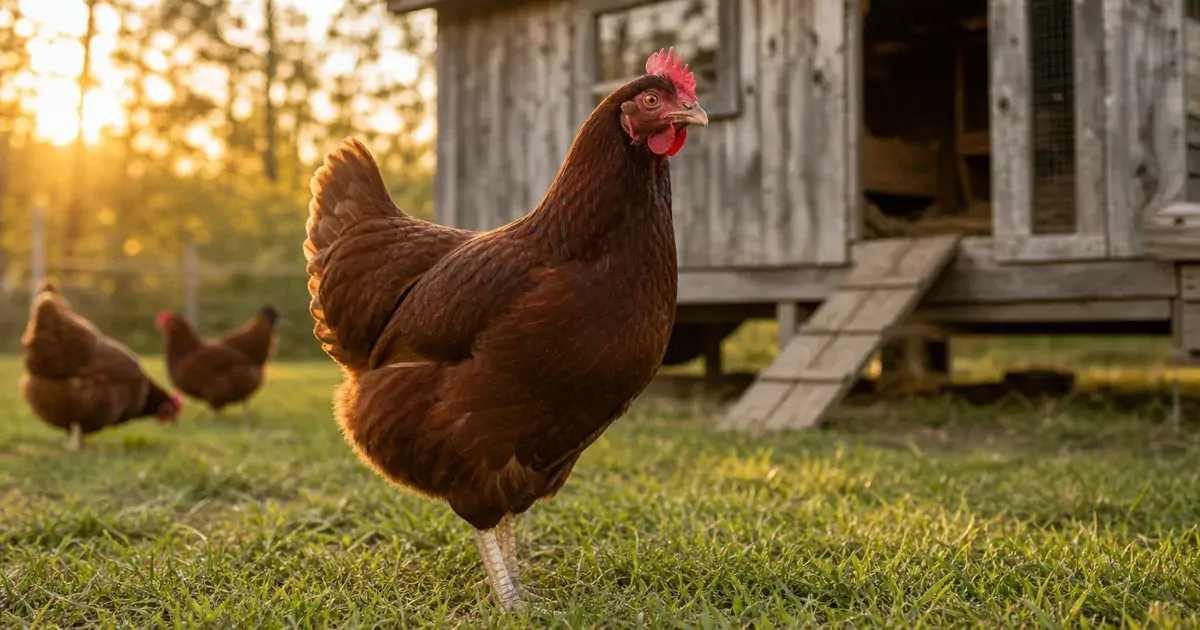
Few birds have shaped the American backyard flock as thoroughly as the Rhode Island Red chicken breed. Walk through almost any hobby farm, suburban coop, or county fair poultry tent and you will find them: deep red hens with a businesslike attitude toward the feeder and a laying record that made the breed a household name long before keeping chickens became a mainstream hobby. Their popularity is not nostalgia. It is the result of a bird that was deliberately built to earn its keep.
That reputation has created an odd situation, though. Nearly everyone has heard of the breed, and far fewer people know what they are actually buying. A hatchery Red and a heritage Red can look nearly identical in the brooder and behave quite differently three years later. Egg figures quoted online usually describe a pullet in her first laying season, not a hen in her fourth. And the breed's temperament reputation swings wildly depending on whose flock someone happened to grow up around.
What follows is a detailed look at the breed itself: where it came from, what the written standard calls for, how the two modern strains have diverged, what egg output realistically looks like across a full lifespan, and the management details that matter most in a small flock. If you are weighing this breed against others, the goal here is to give you enough specifics to make that call with confidence.
Origins, Development, and the Two Strains You Can Buy Today
The breed traces back to the farms of Rhode Island and southeastern Massachusetts in the second half of the 1800s. Local poultry keepers crossed imported Asian and Mediterranean stock — Malay, Java, Cochin, and Brown Leghorn blood are all commonly cited in the breed's background — with the practical goal of producing a hardy, red-feathered farm bird that laid well and still dressed out respectably for the table. There was no single inventor and no single farm. It was a regional project, refined over decades by people who needed results rather than ribbons.
The American Poultry Association admitted the single comb variety to its standard in 1904, with the rose comb variety following two years later. The bird eventually became the official state bird of Rhode Island, and a stone monument in Adamsville still marks the breed's development. Understanding this Rhode Island Red history is not trivia — it explains the bird's build. Those Asian ancestors contributed body mass and a rectangular, brick-shaped frame; the Mediterranean side contributed laying drive. That combination is exactly why the breed became one of the foundational dual purpose chicken breeds in North America and why it later served as a parent stock for countless commercial brown-egg hybrids.
Heritage Reds Versus Production Reds
This is the single most important distinction for anyone shopping, and most listings do not spell it out. Heritage-type birds were bred to the written standard: heavier, slower to mature, with dense mahogany plumage so dark it can look nearly black in shadow, and a broad, deep body. Production strains — the ones most large hatcheries ship — were selected almost entirely for early, heavy laying. They tend to be lighter in body, brighter or more orange-red in color, faster to reach point of lay, and shorter-lived as productive hens.
Neither is wrong. They simply solve different problems. A homesteader raising cockerels for meat alongside laying hens will get far more carcass from heritage stock. Someone who wants a full egg basket by late summer from spring chicks will be better served by production birds. Conservation organizations that monitor traditional poultry lines have flagged the original heritage type as needing continued attention, largely because the commercial strain became so dominant that fewer breeders maintain the standard-bred version.
A practical tip when evaluating stock: ask the seller about adult weights and hatch-to-lay timing rather than asking whether the birds are heritage. Standard weights run roughly 8.5 pounds for a mature rooster and 6.5 pounds for a hen. Production birds commonly come in a pound or more under that. The number tells you more than the label does.
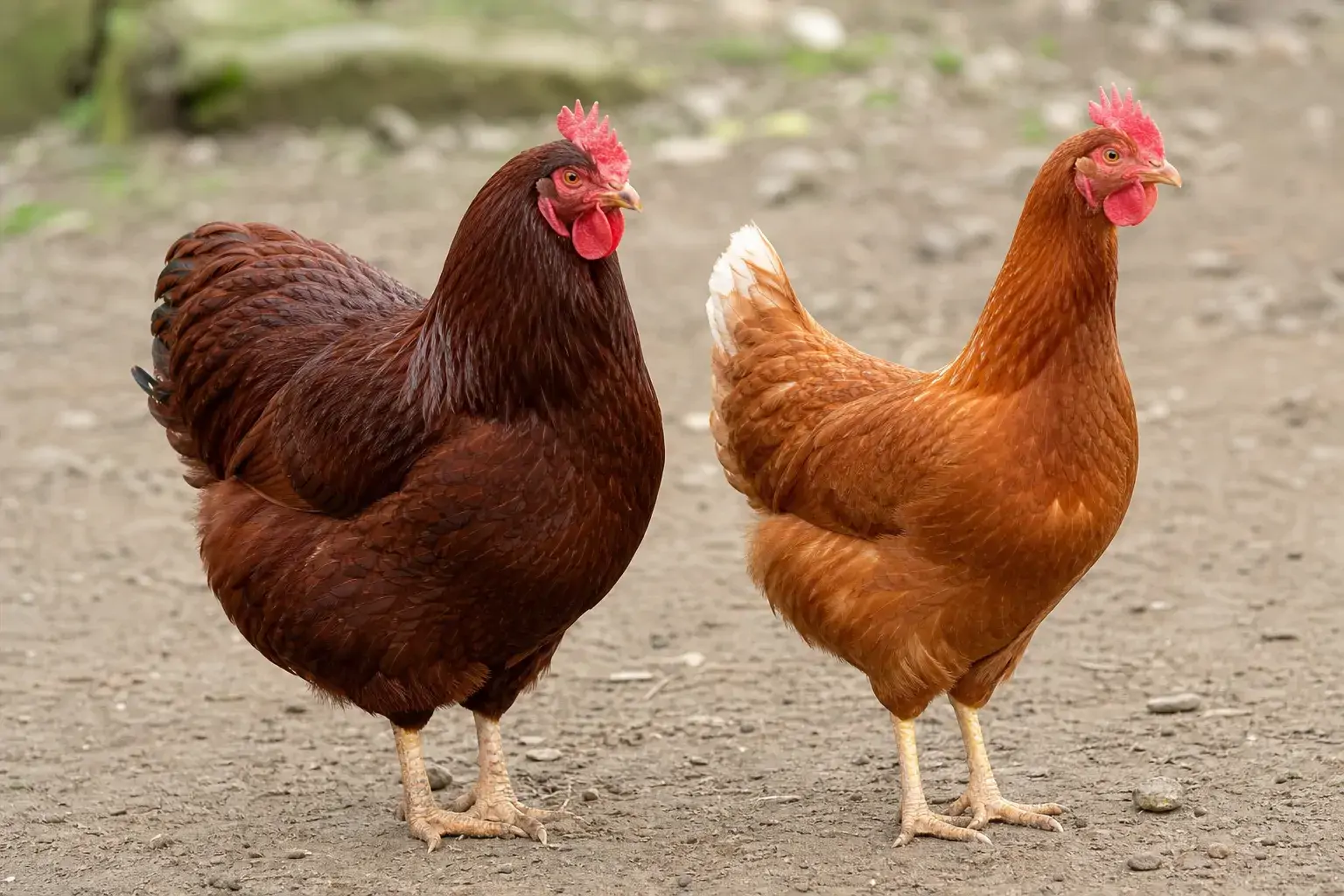
Takeaway: The name on the box does not tell you which bird you are getting — body weight, plumage depth, and maturity rate do, and those differences shape everything from feed cost to how many productive years you get.
Appearance, Temperament, and Flock Behavior
A well-bred bird of this breed is unmistakable: a long, deep, almost oblong body carried horizontally, rich red plumage with black in the tail and often in the wing flights, yellow legs, and a bright red comb and wattles. Both single comb and rose comb varieties are recognized, though the single comb is far more common in the United States. Chicks hatch a rusty red-brown, frequently with a dark smudge or stripe on the back, which fades as juvenile feathering comes in.
Among the Rhode Island Red breed characteristics that owners notice first is confidence. These are not timid birds. They forage energetically, investigate anything new in the run, and are usually first to the gate when a keeper appears. In a mixed flock they tend to place high in the pecking order, which is worth planning around if you also keep gentler breeds.
What to Expect From Hens Versus Roosters
Hen behavior is generally described as bold but manageable. They are not lap chickens in the way that some heavier, slower breeds are, and many keepers find them more interested in food than in affection. That independence is part of why the breed shows up on so many lists of easy chickens for people who do not want a high-maintenance flock — they are self-sufficient foragers that do not require constant fussing.
Roosters are a different conversation. The breed has a long-standing reputation for assertive males, and while plenty of individual roosters are perfectly civil, the pattern is common enough that it should factor into your decision. Assertive genetics plus a keeper who wrestles or chases young cockerels as a game tends to produce a bird that challenges people at maturity. If you plan to keep a rooster around children, calm handling from day one and honest culling decisions matter more than breed averages.
The practical Rhode Island Red temperament picture, then, is this: active, opinionated, hardy, and rarely fragile — but not the best fit if your priority is a flock of docile birds that tolerate being carried around. Families specifically wanting the calmest possible hens often pair a few Reds with softer-tempered breeds rather than keeping an all-Red flock.
Common Mistakes in Mixed Flocks
The most frequent error is under-building the space. Confident birds in a tight run will pick on quieter flockmates, and feather picking that gets blamed on breed aggression is very often a stocking-density problem. A second common misstep is introducing a small number of gentle newcomers to an established group of Reds all at once with no visual barrier period; slow introductions through wire, with multiple feeders and separate hiding spots, dramatically reduce conflict.
One overlooked factor is feeder geometry. Dominant hens guard a single feed pan easily but cannot guard three spread across a run. Adding a second waterer and a second feeding station is often the cheapest fix for flock tension that owners assume is temperament.
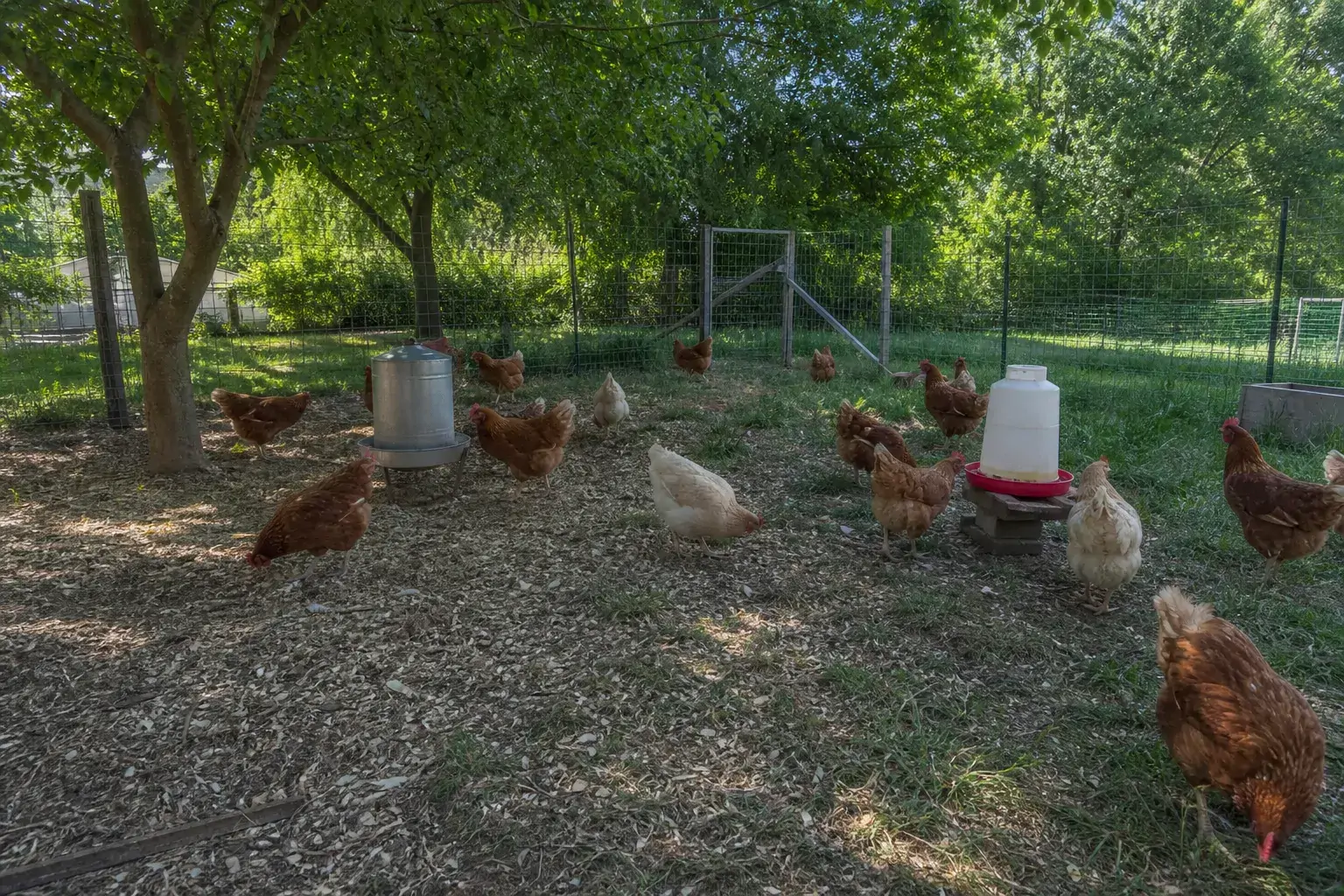
Takeaway: This is a bird with presence. Give it room, spread out resources, and think carefully before keeping a rooster in a household with small children.
Egg Production, Care, and Long-Term Management
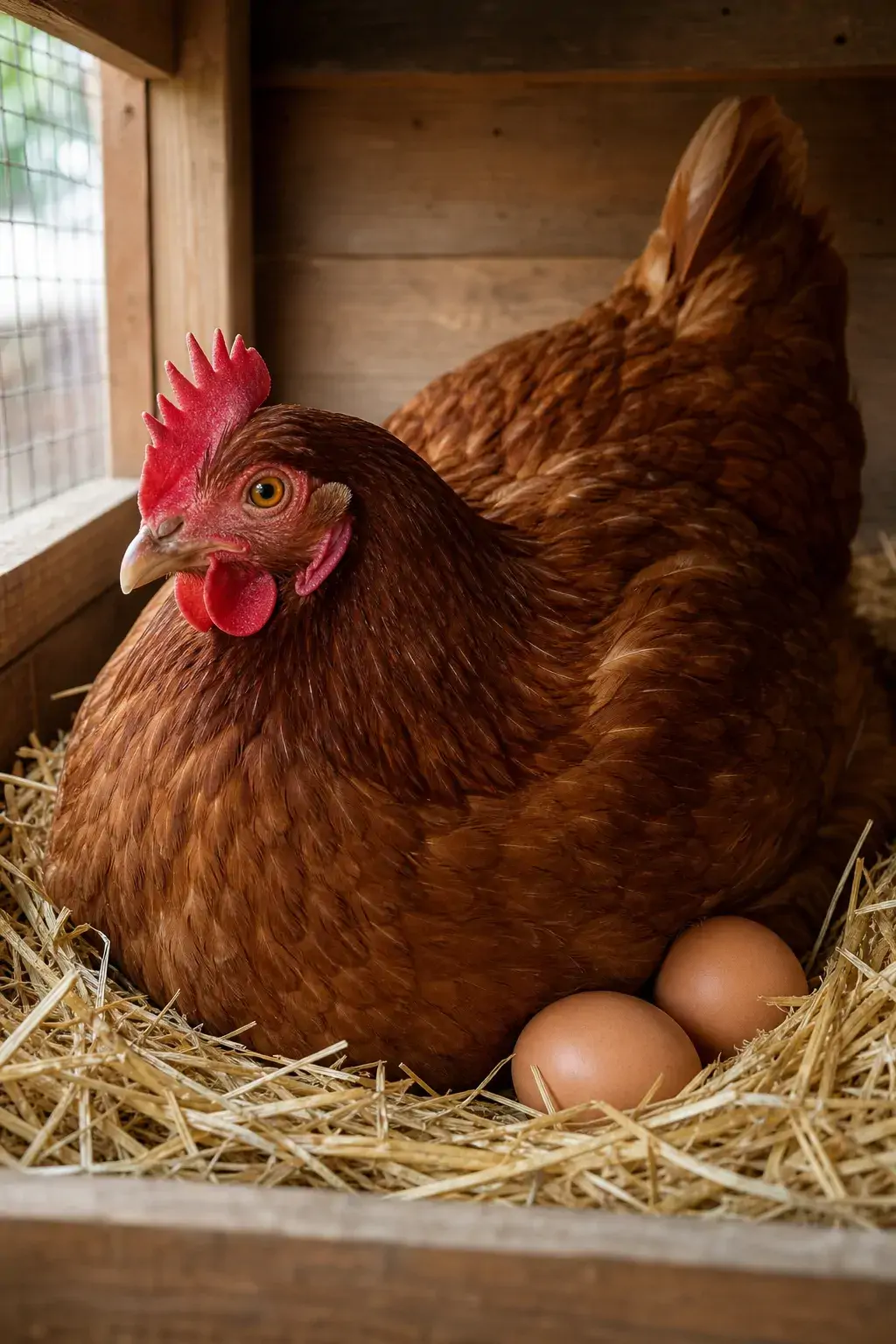
Laying performance is the reason most people choose this breed, and it deserves a realistic accounting. Pullets typically begin laying somewhere around 18 to 22 weeks, with production strains often on the earlier end and heritage birds sometimes taking until 24 weeks or beyond. Eggs are brown, generally light to medium in shade, and start small before settling into a large or extra-large size by the second or third month of lay.
Annual output for a healthy first-year hen commonly falls in the 200 to 280 range, with well-selected production lines at the upper end. That is enough to keep the breed firmly among the best egg laying chicken breeds available to backyard keepers, though the number is not static. Expect a meaningful drop after the first molt, roughly 15 to 20 percent per year thereafter, and a longer productive tail from heritage stock that started lower but declines more gently.
| Breed | Approx. eggs per year (first season) | Egg color | Typical temperament | Dual-purpose value |
|---|---|---|---|---|
| Rhode Island Red | 200-280 | Brown | Bold, active, assertive | Good |
| Plymouth Rock | 180-220 | Brown | Steady, friendly | Good |
| Buff Orpington | 150-200 | Light brown | Very docile, often broody | Good |
| White Leghorn | 250-300 | White | Flighty, alert | Poor |
| Australorp | 200-260 | Brown | Calm, quiet | Moderate |
Read that table as a rough orientation rather than a guarantee. Strain, feed quality, daylight hours, parasite load, and stress all move the numbers more than breed averages do.
Practical Considerations for Housing, Feed, and Health
Sound Rhode Island Red care is mostly unglamorous. A layer ration of roughly 16 to 18 percent protein once birds reach point of lay, free-choice oyster shell offered separately rather than mixed into feed, constant clean water, and grit for any bird eating anything other than crumble. Heavy layers pull hard on calcium reserves, and thin or misshapen shells in an otherwise healthy hen frequently trace back to calcium availability rather than illness.
The breed handles cold well thanks to its body mass and tight feathering, and it is a regular on lists of cold hardy chicken breeds for northern states. The weak point is the large single comb, which is vulnerable to frostbite in damp, poorly ventilated coops. Ventilation above roost height, dry bedding, and no direct drafts on the birds do more to prevent frostbite than added heat, which brings its own risks. In hot regions, these are moderately adaptable birds, though keepers in the Deep South sometimes lean toward heat tolerant chickens for summer comfort; shade, deep cool water, and airflow go a long way regardless of breed.
Broodiness has largely been bred out, particularly in production strains. Occasional hens do go broody and can be decent mothers, but anyone planning to hatch chicks naturally should not count on it. An incubator or a broody hen of another breed is the more reliable plan.
Health-wise, this is a robust breed with no widespread breed-specific weaknesses, which is a genuine advantage. Standard preventive management applies: routine checks for mites and lice at the vent and under the wings, dry litter, a regular parasite monitoring habit, and quarantine for any incoming birds. Sudden drops in laying, pale or discolored combs, labored breathing, or persistent lethargy may indicate a problem and should be evaluated by a qualified professional rather than self-treated based on an internet search.
What Many Guides Miss About Long-Term Ownership
Most breed profiles stop at the first-year egg number. The more useful question is what you plan to do with hens at year three and four. High-output production strains tend to burn brightly and then taper sharply, and they are also more prone to reproductive issues as they age — a general pattern across heavily selected commercial layers rather than a flaw unique to this breed. Heritage birds usually stay in the basket longer at lower volume.
That has real budget implications. Feeding a non-laying hen for three more years is a choice, not an accident, and it is worth deciding in advance whether your flock is a working flock, a pet flock, or some honest mix of the two. Keepers who work through a chicken breed comparison chart before ordering chicks usually make that decision more deliberately than those who buy on reputation alone. It is also why many people building a first flock start with a mixed straight order rather than committing entirely to one breed.
Takeaway: Expect strong output early, plan for the decline, and build your coop and feeding routine around a heavy, calcium-hungry layer rather than a light ornamental bird.
Is This the Right Breed for Your Flock?
The honest answer depends on what you want out of a chicken. If your priorities are a full egg basket, a bird that forages hard and shrugs off a New England winter, and stock that is easy to source at reasonable cost, the case is very strong. If you want quiet lap hens, a reliable broody, or a flock that will not push smaller breeds around, other options fit better.
A useful way to frame the decision: this breed rewards keepers who want productivity and low fuss, and frustrates those who want a docile ornamental flock. The Rhode Island Red chicken was created by farmers with practical goals, and more than a century later it still behaves like a bird designed for work. Match that to your own goals honestly and the breed rarely disappoints.
Takeaway: Choose this bird for output, hardiness, and independence — not for cuddliness.
Final Thoughts
The Rhode Island Red chicken breed has stayed near the top of American backyard flocks for well over a century because it does the fundamentals well: it lays heavily, tolerates cold, forages efficiently, and rarely needs coddling. The details that separate a satisfied keeper from a disappointed one usually come down to strain selection, adequate space, calcium management, and realistic expectations about how long peak production lasts.
Pick your source carefully, ask about adult weights and maturity timing, give bold birds enough room to coexist peacefully, and plan for the years after the first molt. Do those four things and this breed will earn its place in the coop the same way it earned its reputation on New England farms.