Blood in Chicken Egg

Blood in Chicken Egg
Few things stop a backyard keeper mid-breakfast faster than cracking open a fresh egg and finding a red speck floating beside the yolk. A bloody chicken egg — whether described as blood in a chicken egg, blood in an egg, or a chicken egg with blood in it — is one of the most common cosmetic defects reported by small flock owners, and while it looks alarming, poultry researchers and extension specialists generally classify blood spots in chicken eggs as a normal, occasional byproduct of how an egg is formed. Understanding the difference between a harmless spot, a meat spot, and a true blood ring helps keepers decide when to shrug it off and when to look more closely at flock health. For broader context on egg production problems and what a healthy laying cycle should look like, see the main guide on chickens not laying eggs.
Signs: What You Are Actually Looking At
Blood spots on eggs are not all the same, and not every red or brown mark inside an egg has the same origin. Whether you found blood in the egg of a chicken you just cracked, a blood spot in egg white, or blood inside chicken egg yolk, identifying the type of blemish is the first step in figuring out whether anything needs to change in the coop.
A Small Red Spot on or Beside the Yolk
This is the classic blood spot: a pinhead to lentil-sized dot of red or brownish tissue sitting on the yolk surface or in the thick white immediately surrounding it. It forms when a tiny blood vessel on the surface of the follicle ruptures as the yolk is released from the ovary. The spot is usually singular, and the rest of the egg looks and smells completely normal, whether you notice it in a raw bowl or as blood in a cracked egg during cooking. Red spots in egg yolk from this cause are benign, and this is what most keepers mean when they describe a blood spot on egg yolk or blood on egg yolk in general.
A Brown, Grey, or Tan Fleck in the White
Often mistaken for blood, a meat spot is a small piece of tissue that has sloughed off the wall of the oviduct and been wrapped into the albumen as the egg travels toward the shell gland. Meat spots tend to be darker and more opaque than blood spots and are more often found suspended in the white rather than attached to the yolk. Like blood spots, they are a formation artifact rather than a sign of contamination.
Diffuse Pink or Cloudy Red Albumen
An egg white with an overall pinkish or blood red egg tint, or one containing several scattered streaks of blood, is a different picture from a single discrete spot. Widespread discoloration can accompany bacterial spoilage, certain feed components, or irritation within the reproductive tract, and it is a sign you should discard the egg and monitor the hen closely rather than simply scoop out the blemish. Blood streaks on eggshell exterior patterns differ from internal discoloration.
Blood on the Outside of the Shell
Streaks or smears of fresh blood on the shell exterior — blood on chicken egg shells, or simply blood on egg surfaces — have nothing to do with egg formation and everything to do with the vent. This pattern is commonly seen in pullets laying their first oversized eggs, and persistent bleeding, straining, or protruding tissue is a sign you should consult a poultry veterinarian promptly.
A Dark Circle Seen During Candling
Anyone incubating eggs will eventually encounter a blood ring: a distinct reddish circle floating inside the shell when the egg is candled, with no visible veining or movement. This indicates that an embryo began developing and then died, allowing its blood vessels to detach and settle into a ring shape. Blood ring eggs must be removed from the incubator, since they can rupture and contaminate viable eggs.
Comparison at a Glance
If your chicken egg has blood in it, use the table below to quickly identify which type of blood spot in chicken egg — or blood spot in egg — you're dealing with.
| Feature | Blood Spot | Meat Spot | Blood Ring |
|---|---|---|---|
| Appearance | Bright to dark red dot, usually on the yolk | Brown, tan, or grey fleck in the white | Red circular band visible only when candling |
| Where it forms | Ovary, at the moment of ovulation | Lining of the oviduct | Inside a fertile egg during incubation |
| Found in fresh table eggs? | Yes, occasionally | Yes, occasionally | No — only in incubated fertile eggs |
| Typical cause | Ruptured follicle capillary | Shed tissue fragment | Early embryonic death |
| Action | Remove spot or eat as is once cooked | Remove or eat as is once cooked | Remove from incubator and discard |
What Causes Blood in Eggs
When keepers ask what causes blood in eggs, the honest answer is that several unrelated mechanisms produce similar-looking results. The following are the explanations most frequently cited in poultry science literature and by university extension programs.
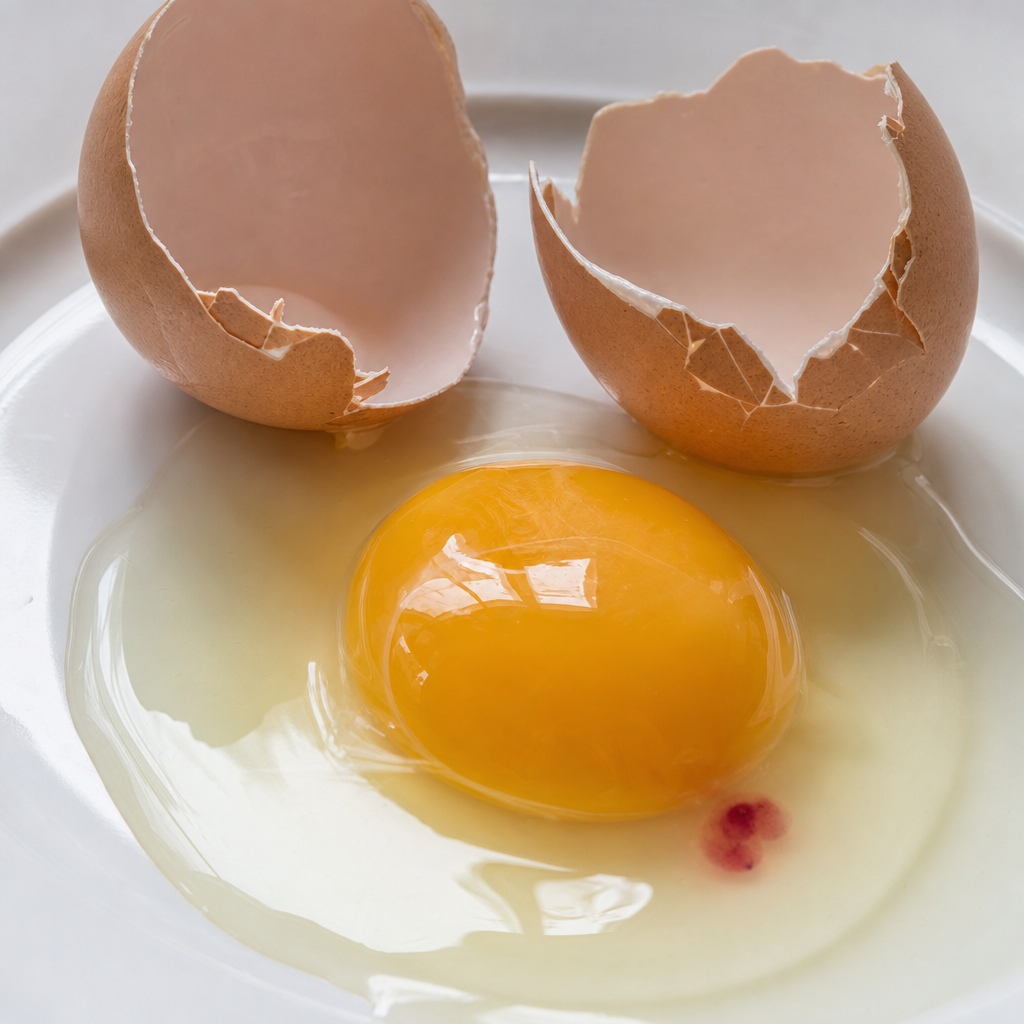
- Normal capillary rupture. The yolk is held in a follicle laced with fine blood vessels. Release is designed to occur along a nearly bloodless seam, but small vessels sometimes break, and the resulting droplet is enclosed with the yolk. Industry figures generally place the incidence at well under two percent of eggs.
- Hen age. Older hens and hens just coming into lay both show higher rates of inclusions. Point-of-lay pullets are still calibrating the process, while aging hens have less elastic follicular tissue. Keepers curious about at what age does a chicken stop laying eggs will notice that the same natural decline correlates with increased spot frequency.
- Genetics and breed. New keepers researching the best chicken breeds for beginners should know that brown-egg layers are documented as producing more blood and meat spots than white-egg layers. Because darker shells are harder to candle through, spots also slip past detection more often in brown eggs sold commercially.
- Stress and sudden disturbance. Predator scares, dogs in the run, aggressive flock mates, transport, or abrupt changes to lighting schedules can trigger an irregular ovulation, increasing the chance of vessel rupture. Stress chicken egg production effects manifest quickly.
- Nutritional gaps. Vitamin A supports the integrity of mucous membranes and vessel walls, and vitamin K is essential for normal clotting. Rations that are stale, heavily diluted with scratch grains, or unbalanced for laying hens are associated with a rise in inclusions.
- Toxins and medications. Certain mycotoxins from moldy feed and some drug residues interfere with clotting and have been linked to increased bleeding into the reproductive tract.
- Reproductive tract irritation or infection. Inflammation of the oviduct sheds more tissue and can introduce blood into multiple consecutive eggs. This is the scenario least likely to resolve on its own.
Blood Ring Egg Causes During Incubation
Blood ring egg causes are entirely separate from table-egg blemishes. Early embryonic death is most often traced to incubator temperature spikes or prolonged dips, humidity extremes, inadequate turning during the first week, rough handling or shipping damage before setting, eggs stored too long or at the wrong temperature, bacterial contamination entering through a dirty or cracked shell, or genetic weakness in the breeding stock. Reviewing incubator logs after a batch of blood rings usually points to a temperature or sanitation issue rather than a problem with the laying flock itself.
Are Blood Spots in Eggs Safe to Eat?
Blood spots in eggs safe to eat is a common question among backyard keepers. For an isolated spot in an otherwise fresh, clean, good-smelling egg, the consensus among food safety authorities is yes. Commercial packers candle eggs and divert most spotted ones, which is why supermarket shoppers rarely see them and backyard keepers see them more often in farm eggs — not because home flocks are less healthy, but because nothing is filtering them out. Blood in farm eggs, and blood in a fresh chicken egg specifically, is simply not caught and discarded the way it is in a commercial packing plant. A bloody egg explained in the simplest terms is a plumbing hiccup, not a disease.
The spot can be lifted out with the tip of a knife or a spoon if it is unappetizing, and the egg cooked normally. What should not be eaten is an egg with an off odor, a green or iridescent tint, watery discolored white, or blood distributed throughout the contents. Eggs that were mistakenly incubated and later found to contain blood rings should never be eaten. Standard handling rules still apply: refrigerate promptly, cook thoroughly, and discard anything questionable.
When to Be Concerned or Consult an Expert
A single spotted egg every few weeks warrants no action beyond a shrug. Patterns, however, deserve attention. Contact a poultry veterinarian or your state extension poultry specialist when you observe any of the following.
- Blood or tissue in most eggs from the same hen over several days. Repeated bloody eggs from one bird are a sign you should have that hen examined rather than assume the cause is dietary.
- Blood streaks on eggshell exterior accompanied by straining or protruding tissue. This combination is a sign you should seek veterinary help the same day, as vent injuries and prolapse can escalate quickly and invite cannibalism from flock mates.
- Blood-tinged eggs alongside lethargy, pale comb, ruffled feathers, reduced appetite, or a swollen abdomen. Systemic signs alongside egg abnormalities are a sign you should arrange a professional evaluation instead of treating at home.
- A flock-wide surge in spotted or malformed eggs. Sudden increases across many birds point toward feed, environment, or an infectious agent, and a feed analysis or veterinary workup is the appropriate next step.
- Blood accompanied by watery whites, misshapen shells, or a production drop. This cluster of changes is a sign you should consult an expert, since several notifiable poultry diseases affect the reproductive tract.
Practical Steps That Reduce the Frequency
While occasional spots cannot be eliminated, keepers can lower the odds. Feed a fresh, complete layer ration and limit treats and scratch to roughly ten percent of daily intake so vitamin levels are not diluted. Store feed dry and sealed to prevent mold. Keep lighting changes gradual rather than abrupt, minimize predator pressure and overcrowding, provide enough nest boxes to reduce competition, and collect eggs frequently. Candling home-collected eggs with a simple flashlight before selling or gifting them is an easy way to sort out blemished ones.

Keepers troubleshooting other egg-quality issues may also find it useful to read about soft-shelled and shell-less eggs, and to review how ration quality shapes output in the guide to feeding laying hens.
Frequently Asked Questions
What does blood in an egg mean?
Blood in an egg usually means a tiny blood vessel ruptured during ovulation or that a small piece of tissue was picked up as the egg moved through the oviduct. It is a normal, occasional mechanical event in how an egg forms, not a sign that the egg is diseased or unsafe.
Why is there blood in my chicken egg?
Most single blood spots come from a ruptured capillary in the follicle at the moment the yolk released, or from a fleck of oviduct tissue picked up on the way to the shell. Stress, hen age, nutritional gaps, and genetics (brown-egg breeds especially) all raise the odds of it happening.
Why do brown eggs have more blood spots than white eggs?
Brown-egg breeds are documented to produce more blood and meat spots than white-egg layers, and their darker shells make spots harder to detect during candling. This is a genetic and shell-color effect rather than a sign of poor health in brown-egg breeds.
Conclusion
Blood spots in chicken eggs are usually a harmless quirk of ovulation rather than an illness, and a bloody egg explained through the lens of anatomy is far less unsettling than it first appears. Track how often it happens, watch the hen rather than just the egg, and bring persistent or worsening patterns to a veterinarian's attention.