Chicken Run Design Ideas That Balance Safety and Space
Chicken Run Design Ideas That Balance Safety and Space
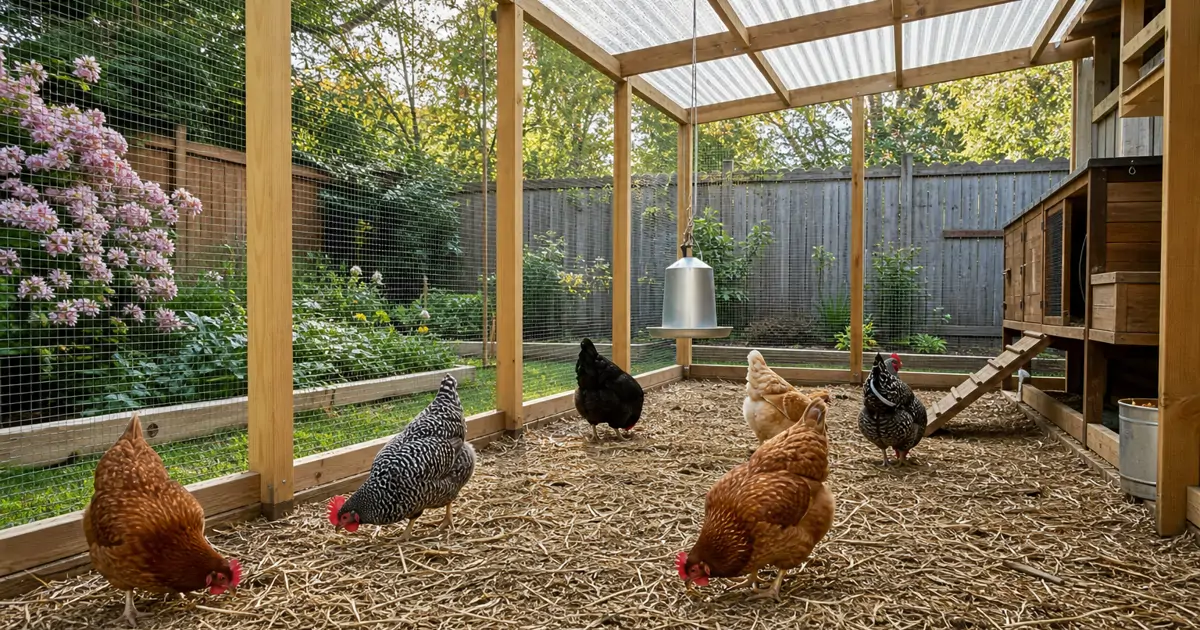
A coop gets most of the attention when people plan a backyard flock, but the run is where chickens actually spend the bulk of their waking hours. A poorly designed run can undo the benefits of an otherwise excellent coop, leaving birds stressed, exposed to predators, or stuck in mud for weeks after a storm. Good chicken run design ideas go beyond stringing up some fencing around a patch of yard; they account for drainage, predator behavior, weather patterns, and the natural instincts of chickens themselves.
This matters for a wide range of keepers, from someone converting a corner of suburban backyard into an enclosure to a homesteader managing a larger flock across acreage. Both face the same underlying questions: how much space is enough, what keeps predators out without turning the run into a fortress, and how do you protect birds from rain, heat, and snow without blocking airflow. This guide works through those questions in practical terms, with attention to the mistakes that show up again and again in poorly planned setups.
Readers will come away with a clearer sense of how to approach outdoor chicken enclosure design as a system rather than a single fence line, including how covered sections, ground-level defenses, and layout choices interact with each other.
Key Elements of a Well-Planned Chicken Run
Every functional run starts with three overlapping considerations: how much room the birds actually need, what the perimeter is made of, and what happens to the ground underfoot. Skimping on any one of these tends to create problems that surface weeks or months later, often after the keeper has already invested time and materials into the wrong configuration.
Space is the most commonly underestimated factor. Chickens that appear content in a cramped run during calm weather often reveal the limitations of that space the moment weather turns bad and they're confined for days at a time. Feather pecking, bullying within the pecking order, and general restlessness tend to increase sharply when birds are packed too tightly, even if the coop itself meets chicken coop size requirements. A run that looks generous when empty can feel very different once six or eight adult birds are moving through it at once.
Sizing the Run for Your Flock
A widely used baseline is roughly ten square feet of run space per standard-sized bird, though that number should be treated as a floor rather than a target. Flocks that free-range for part of the day can tolerate a smaller dedicated run, while birds confined most of the time benefit from considerably more room. Bantams need less, mixed flocks with larger breeds need more, and multi-level layouts using ramps or raised platforms can stretch usable square footage without expanding the footprint.
One frequently overlooked factor is vertical space. Chickens like to perch, scratch at different heights, and observe their surroundings from slightly elevated positions. A run with only flat ground wastes an opportunity; adding low platforms, stumps, or angled boards gives birds more usable territory within the same fenced area.
Choosing Fencing and Materials for a Predator Proof Run
Fencing choice is where many backyard setups fail, usually because the keeper focused on keeping chickens in rather than keeping predators out. A true predator proof run needs to resist digging, climbing, and reaching through gaps, which rules out standard chicken wire as a sole barrier in most situations. Chicken wire keeps birds contained but does little to stop a determined raccoon, weasel, or dog, since the openings are large enough for small predators to reach through and the wire itself is easy to tear.
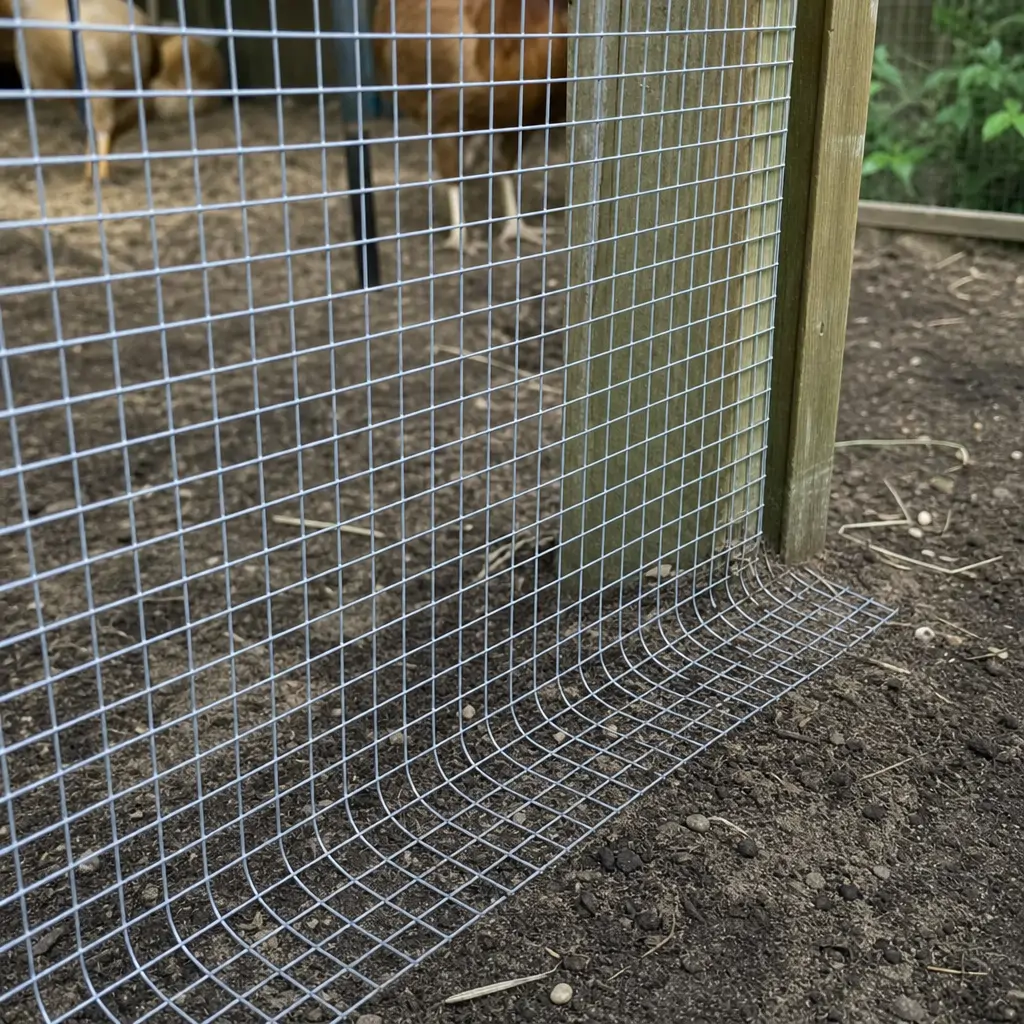
Hardware cloth with half-inch openings, buried at least twelve inches into the ground and bent outward in an L-shape, addresses the digging problem that undermines so many enclosures. Predators that can't tunnel straight down will often try to dig at the base of a fence line, and an outward-facing buried skirt forces them to dig away from the run rather than under it. For overhead protection, netting or additional hardware cloth deters hawks and owls, which are frequently underestimated threats in daytime hours.
Chicken run plans that ignore climbing predators, such as raccoons, tend to fail at the top of the fence rather than the bottom. A run height of six feet or more, combined with an angled overhang at the top, makes climbing over significantly harder. This detail rarely appears in basic tutorials but matters enormously in areas with established raccoon populations.
Takeaway: space and fencing decisions made early shape nearly every other outcome, from flock behavior to how much maintenance the run demands later.
Covered Run Ideas and Weather Protection
Weather protection is often treated as an afterthought, added only after the first heavy rain turns the run into standing water or the first heat wave leaves birds panting in direct sun. Covered run ideas solve both problems at once by giving chickens shaded, dry ground they can retreat to without going back inside the coop, which matters because chickens that are reluctant to leave a stuffy coop during bad weather miss out on the activity and foraging that keep them healthy.
A full roof isn't always necessary or even desirable, since some exposure to sun and rain benefits both the birds and the ground itself, discouraging the buildup of pathogens that thrive in permanently shaded, damp soil. Many keepers instead choose a partial roof over a portion of the run, often using corrugated polycarbonate panels, metal roofing offcuts, or even a simple tarp strung tightly enough to shed water.
Combining Open and Covered Zones
The most functional layouts split the run into distinct zones rather than covering everything uniformly. A covered section near the coop door gives birds an easy transition space, useful for dust bathing, feeding, and shelter during sudden rain. An open section further from the coop allows fuller sun exposure and better drying after wet weather, since sunlight helps break down droppings and reduce parasite loads in a way that permanently shaded ground cannot.
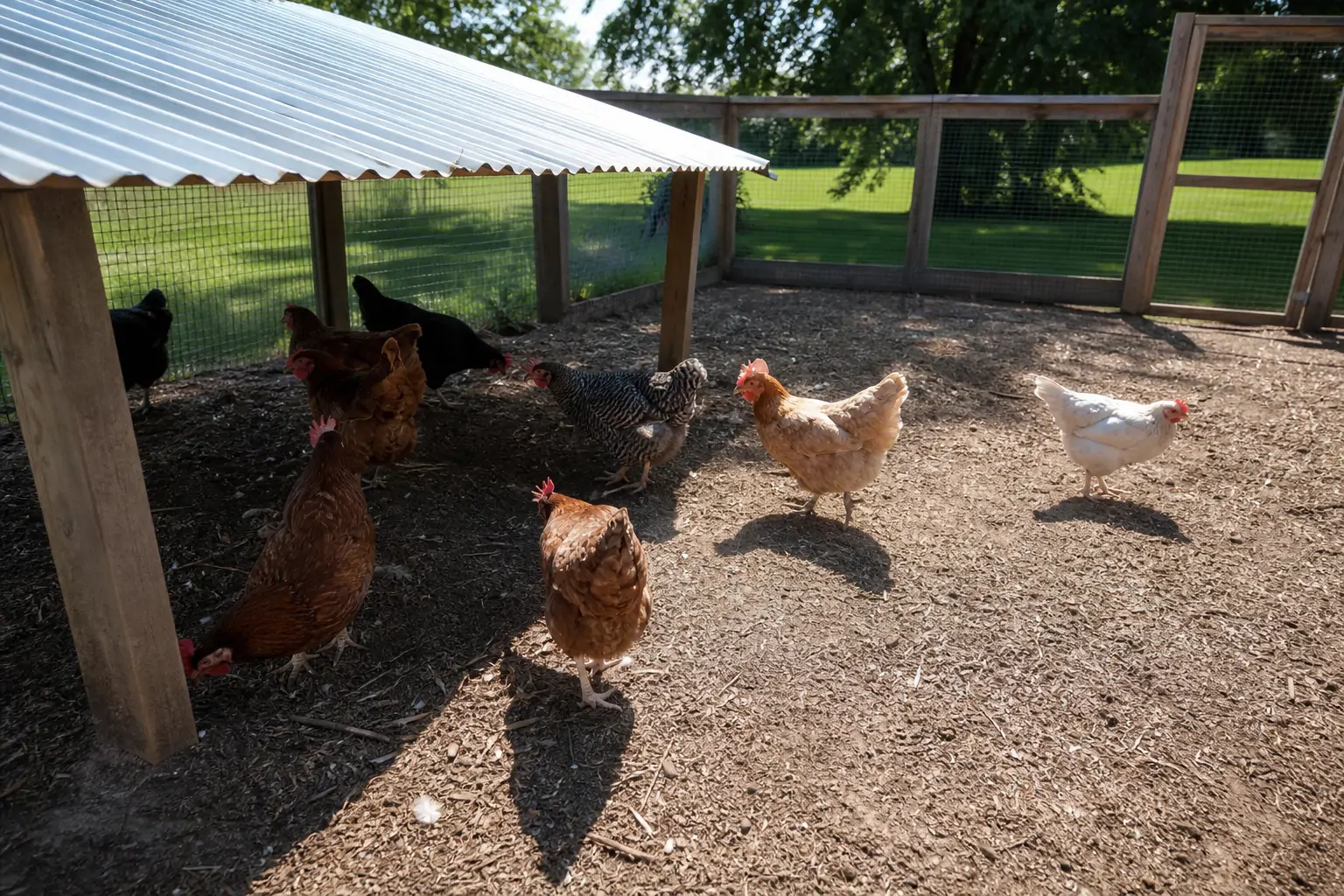
This zoned approach also helps with chicken coop ventilation design indirectly. Birds spending time in a well-ventilated outdoor covered area rather than crowding inside a stuffy coop during marginal weather reduces ammonia buildup and moisture inside the coop itself, which in turn lowers respiratory stress across the flock.
Takeaway: covering part, rather than all, of the run tends to produce healthier ground conditions and gives chickens more flexibility in how they use the space.
Common Mistakes That Undermine Predator Proof Runs
Even well-intentioned designs often fail in predictable ways. Recognizing these patterns ahead of time saves both money and, more importantly, prevents losses that are difficult to undo once they happen.
A recurring mistake is treating the run door or gate as an afterthought, using a flimsy latch that a raccoon can manipulate within minutes. Predators capable of opening simple hook-and-eye latches are common enough that spring-loaded or carabiner-style locks are worth the small additional cost. Another frequent issue is gaps left where the run meets the coop wall, often no wider than a couple of inches but more than enough for a weasel or snake to exploit.
Overlooked Ground-Level Vulnerabilities
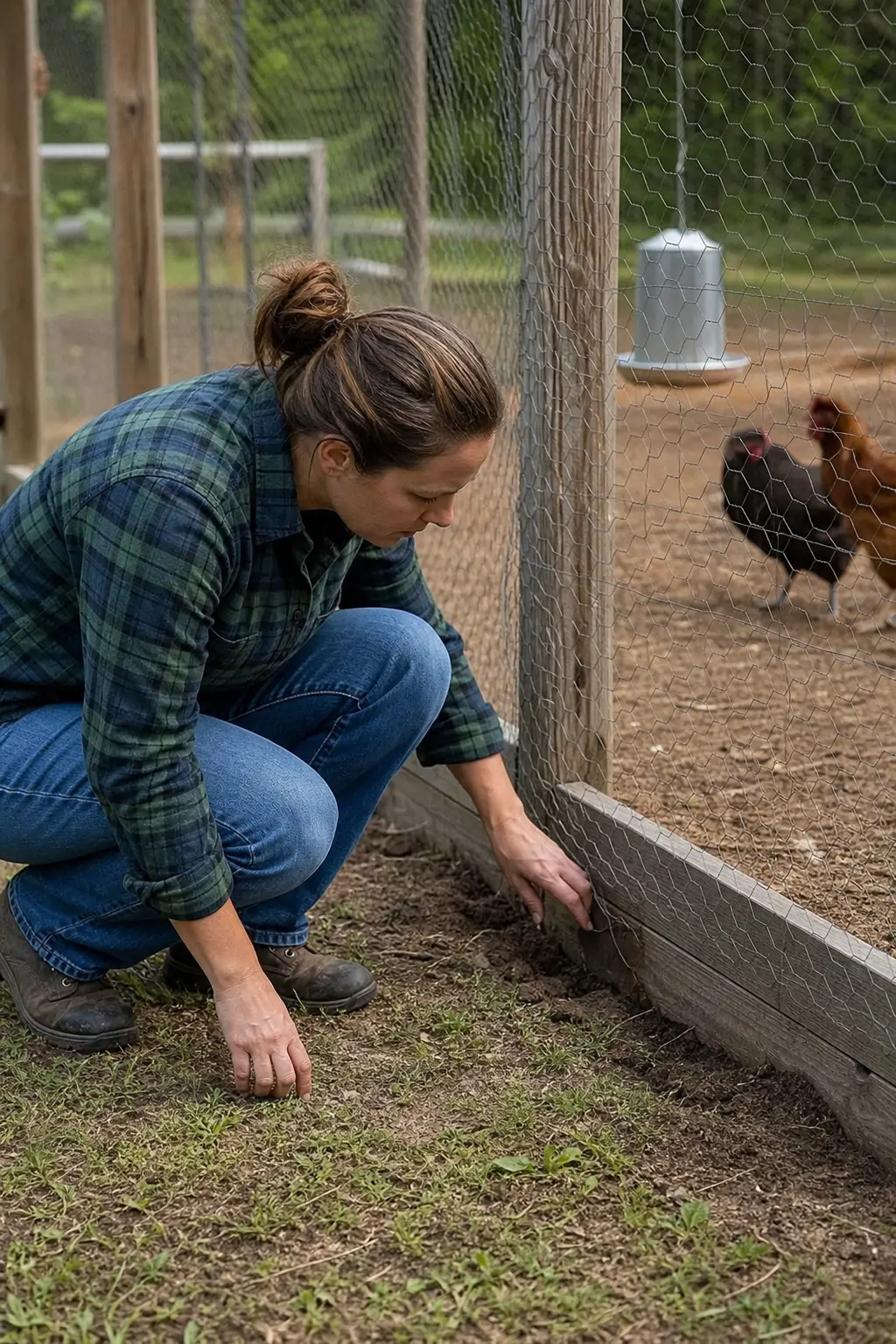
Ground-level weaknesses tend to be the most underestimated part of run design. Loose soil along fence edges, gaps under gates, and low spots where water pools and erodes the buried wire barrier over time all create openings that weren't there when the run was first built. Seasonal freeze-thaw cycles in colder climates can shift buried hardware cloth, so periodic inspection along the perimeter after winter is a practical habit rather than an optional extra.
Another pattern worth watching for involves flooring choices inside the run itself. Some keepers apply chicken coop flooring options meant for indoor spaces to outdoor runs, only to find that materials like fine sand wash away or compact into mud under regular rainfall. Coarser sand, gravel, or a deep layer of wood chips generally holds up better outdoors and drains more effectively than materials chosen primarily for indoor coop floors.
Takeaway: most predator or drainage failures trace back to a handful of recurring gaps in design, and a periodic walk-through of the fence line and ground level catches most of them before they become a real problem.
Designing a run well means thinking beyond the fence itself, toward how chickens actually behave, how predators actually operate, and how weather actually moves through a given yard over a full year. None of this requires an elaborate structure. It requires attention to the details that basic setups tend to skip: buried and outward-angled fencing, a mix of covered and open ground, adequate space per bird, and secure hardware at every entry point.
Investing time upfront in thoughtful outdoor chicken enclosure design pays off in fewer predator incidents, calmer birds, and far less cleanup after bad weather. A run built with these considerations in mind tends to need less ongoing repair and gives chickens a genuinely usable outdoor space rather than a bare enclosure they merely tolerate.