Winter Egg Production Chickens: Keep Hens Laying Through Cold Months
Winter Egg Production Chickens: Keep Hens Laying Through Cold Months
Every fall, backyard flock owners notice the egg basket getting lighter and start asking the same question: do chickens lay eggs in winter, or does production simply shut down until spring? Research on poultry reproductive physiology shows that hens are capable of laying year-round, but the rate at which they do so is tightly linked to day length, nutrition, age, and stress — which is why most flocks slow dramatically rather than stopping outright. If your birds have gone quiet and you are not sure whether cold weather is the culprit or something else is at play, it helps to start with our egg-laying troubleshooting guide and then use this page for the seasonal details.
Winter Laying Slowdown Explained: The Biology Behind the Drop
The single most influential factor in seasonal egg production is photoperiod — the number of hours of light a hen perceives each day. Light entering the eye stimulates the hypothalamus and pituitary gland, which release hormones that trigger ovulation. Extension poultry specialists generally cite roughly 14 to 16 hours of light per day as the threshold for sustained, consistent laying. In much of the continental United States, daylight drops below 12 hours by late October and bottoms out near 9 hours around the winter solstice, well under what a hen's reproductive system needs to run at full speed.
That is the core of chicken egg production winter slump explained in one sentence: short days and egg laying are directly linked — shorter days reduce hormonal signaling, and fewer ovulations are released. This is not a malfunction. It is an evolutionary safeguard. Wild jungle fowl, the ancestors of domestic chickens, bred seasonally so chicks would hatch when food was abundant. Modern laying breeds have been selected for far longer laying periods, but the underlying light sensitivity was never bred out.
Day length is not the only variable, however. Several factors typically stack up at the same time each fall:
- Annual molt. Most hens over a year old replace their feathers in late summer or autumn. Feather protein synthesis is metabolically expensive, and laying usually pauses entirely during the heaviest weeks of molt.
- Higher maintenance energy needs. Cold birds burn more calories on thermoregulation. If feed intake or feed quality does not keep up, the body prioritizes survival over egg formation.
- Age. A hen's most productive stretch is her first laying year. Second- and third-year hens often show a much deeper winter dip than pullets.
- Water availability. An egg is roughly two-thirds water. Frozen waterers, even for part of the day, measurably suppress production.
- Confinement stress. Bad weather means more time indoors, more crowding, more pecking, and less foraging — all of which can depress laying.
Understanding which of these applies to your flock determines what you can realistically fix. A pullet hatched in spring will often lay straight through her first winter with no intervention at all, while a three-year-old hen finishing a hard molt in December is unlikely to produce much no matter what you do.
Two Legitimate Approaches: Rest or Supplement
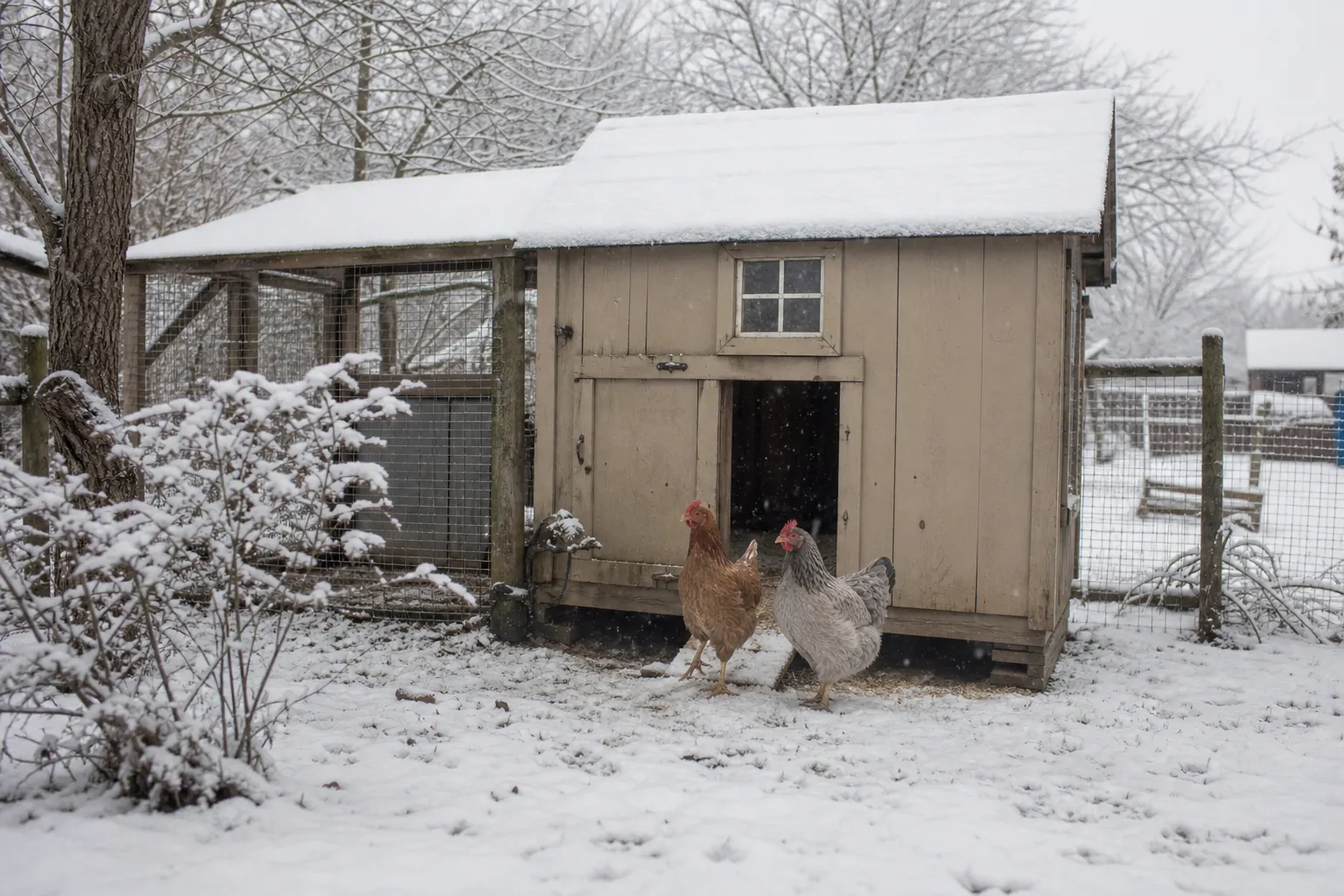
Before working through a cold weather laying guide, it is worth deciding what outcome you actually want. There is no single correct answer, and both strategies are widely used by experienced keepers.
| Factor | Let Hens Rest Naturally | Supplement Light for Winter Eggs |
|---|---|---|
| Winter egg output | Low to none for 2-3 months | Moderate to near-normal |
| Equipment needed | None | Bulb, timer, safe wiring |
| Effect on lifetime output | Total lifetime eggs are similar; spread over more years | Total lifetime eggs are similar; concentrated into fewer years |
| Labor and monitoring | Minimal | Daily timer checks, fire-safety inspection |
| Best suited to | Pet flocks, heritage breeds, keepers who buy eggs seasonally | Households relying on their own eggs, small egg-sellers |
| Main drawback | Empty nest boxes through the darkest months | Fire risk if installed poorly; birds get no photoperiod break |
Research on commercial layers indicates that a hen is born with a finite number of ova, so aggressive lighting programs do not create extra eggs out of nowhere — they largely shift the timing. Keepers who plan to keep hens as long-lived backyard birds often prefer the rest approach. Those focused on boosting winter egg production for household use typically supplement. Many split the difference, adding a modest amount of morning light to hold production at a low but steady level. Choosing cold-hardy chicken breeds from the outset can also soften how far winter output drops in the first place.
Step-by-Step: How to Keep Chickens Laying in Winter
The following sequence moves from diagnosis to management. Working through it in order prevents the common mistake of adding lights to a flock whose real problem is a frozen waterer or an unfinished molt.
1. Rule Out Non-Seasonal Causes First
Before assuming the calendar is responsible, check the basics. Look for hidden nests outside the coop, evidence of egg eating (shell fragments or yolk smears in bedding), or a sudden predator scare that changed flock behavior. Inspect a few birds: a hen in lay generally has a bright red comb and wattles, a wide and moist vent, and a pubic-bone spread of two or more fingers. Pale combs and tight vents across the whole flock point to a genuine seasonal or molt-related pause rather than missing eggs.
2. Confirm Where Each Hen Is in Her Molt Cycle
Feathers on the ground, pin feathers along the neck, and a ragged tail all indicate an active molt. Poultry extension sources describe a typical molt lasting anywhere from about 6 to 16 weeks depending on the individual and how abruptly it starts. Laying rarely resumes until new feathers are largely grown in, so light supplementation during heavy molt produces little benefit. Note which hens are molting and expect them back later than the rest of the flock. Timing details are covered in depth in our overview of molting and egg production.
3. Add Supplemental Lighting Deliberately, Not Casually
If you choose to supplement, the goal is a consistent total of roughly 14 to 16 hours of light per day, counting natural daylight. Supplemental lighting egg production works best when artificial hours are added in the morning rather than the evening, so that when the timer clicks off, birds are not plunged into sudden darkness away from the roost. A common setup is a low-wattage LED bulb producing enough light to comfortably read by at bird level, on a timer that switches on in the pre-dawn hours.
Consistency matters more than intensity. Erratic lighting — on some days, off others — sends conflicting hormonal signals and can be worse than no supplementation at all. Increase day length gradually, by 15 to 30 minutes per week, rather than jumping from 9 hours to 15 overnight. For wiring, fixture placement, and safety considerations, see the dedicated guide to artificial light for winter eggs. Dust in a coop is highly combustible, so fixtures should be enclosed, securely mounted well out of reach of the birds, and inspected regularly.
4. Match Feed to Cold-Weather Energy Demands
A hen's maintenance energy requirement rises as temperatures fall, and she will eat more to compensate. If the extra intake is filled with scratch grains, treats, or kitchen scraps, the overall protein and calcium concentration of her diet drops — a very common reason why flocks underperform even with lights installed. Experts generally recommend keeping a complete layer ration at 16 to 18 percent protein as the foundation of the diet and limiting scratch and treats to a small fraction of total intake, often cited as no more than about 10 percent.
Calcium deserves special attention. Shell formation draws heavily on calcium reserves, and hens self-regulate intake when free-choice oyster shell is offered in a separate container. Thin or soft shells appearing in winter are worth investigating further; our page on calcium deficiency in laying hens covers the nutritional and physiological angles in detail.
5. Guarantee Unfrozen Water All Day Long
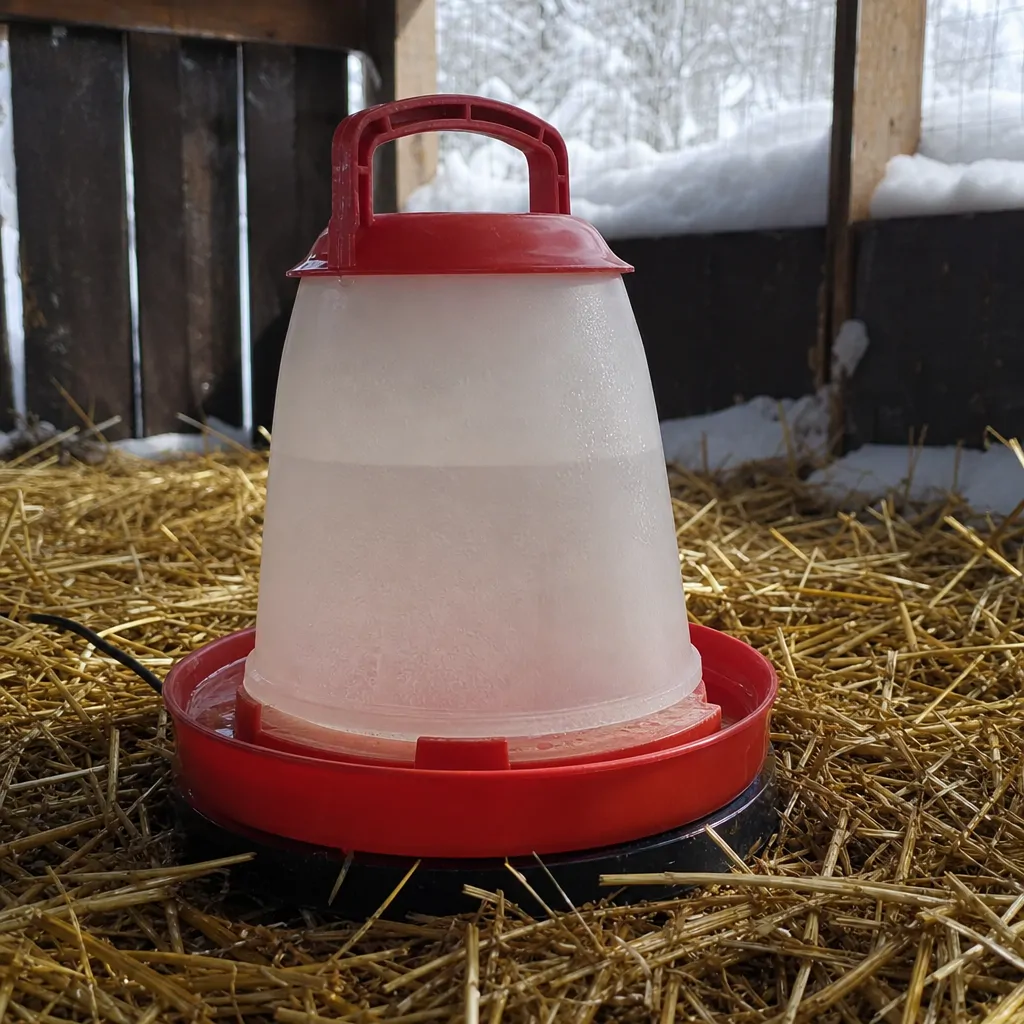
This step arguably delivers the biggest return of anything on this list. Because eggs are largely water, even a few hours without access measurably reduces output, and a full day of frozen waterers can knock a flock off lay for days afterward. Options include heated poultry waterers, heated bases designed for metal founts, insulated containers checked and refilled several times daily, or placing waterers where midday sun hits them. Whatever the method, the practical standard is simple: liquid water available at every daylight hour. Any electrical device in the coop should be rated for outdoor or agricultural use and kept clear of bedding.
6. Ventilate Without Creating Drafts
Chickens tolerate cold far better than damp. Moisture from respiration and manure raises humidity inside a closed coop, and damp air conducts heat away from combs and wattles, increasing frostbite risk. The widely recommended approach is generous ventilation high above roost level — ridge vents, gable vents, or covered openings under the eaves — combined with a draft-free zone at roosting height. Deep, dry bedding absorbs moisture and should be topped up or turned as it packs down.
Supplemental heat is a separate question. Many poultry extension services discourage heat lamps in backyard coops because of fire risk and because heated birds fail to acclimate, leaving them vulnerable if the power fails. Cold-hardy breeds handle sub-freezing temperatures well when dry, wind-protected, and adequately fed.
7. Reduce Confinement Stress and Boredom
Winter concentrates a flock into a smaller usable space for longer stretches, and crowding is a reliable trigger for feather picking, bullying, and laying pauses. Practical measures include shoveling out a sheltered run area, adding a wind-blocking tarp on the prevailing-weather side, providing extra roosting bars and multiple feeding stations so lower-ranking hens can eat undisturbed, and offering enrichment such as hanging cabbage, a scratch-filled deep litter area, or a dry dust-bathing box. The connection between stress chicken egg production is explored further in our dedicated stress recovery guide.
8. Stagger Flock Ages for Year-Round Production
One of the most effective long-term strategies for keeping hens laying through winter has nothing to do with lights or feed. Pullets that reach laying age in late summer or early fall typically lay through their first winter without a molt, because they do not molt in that first year. Keepers who add a few new birds each spring maintain a rolling supply of first-year layers, so the flock always contains birds at peak productivity while older hens take their seasonal break.
9. Collect Eggs Frequently in Freezing Weather
Eggs left in the nest during sub-freezing temperatures can crack as the contents expand, and a hairline crack compromises the shell's protective barrier. Collecting two or three times a day during cold snaps, adding extra nesting material for insulation, and discarding any visibly cracked or frozen eggs are standard cold-season practices. Any egg with an unusual appearance inside — including blood or tissue spots, which have their own explanations covered under blood in chicken egg — is worth noting as part of your seasonal records.
10. Keep Simple Records
A calendar on the coop wall with daily egg counts turns guesswork into information. Over two or three seasons, records reveal your own flock's normal pattern: when the slowdown starts, how deep it goes, how quickly production returns, and whether a change in lighting or feed actually made a difference. Records also make genuine problems easier to spot, because an abrupt drop looks very different from a gradual seasonal taper.
What Realistic Winter Output Looks Like
Expectations matter as much as management. The table below summarizes general patterns described in poultry literature; individual flocks vary considerably.
| Situation | Typical winter pattern |
|---|---|
| First-year pullet, no supplemental light | Often continues laying at a reduced rate through winter |
| Second-year hen, no supplemental light | Commonly stops for several weeks to a few months after molt |
| Production breeds with supplemental light | Moderate output maintained; short pauses still possible |
| Heritage or ornamental breeds | Naturally lower baseline; pronounced seasonal pause is normal |
| Hens over three years old | Declining output overall, with the deepest dip in winter |
Because age is such a strong driver, a flock that produced abundantly last winter and barely at all this year may simply be a year older. That pattern is described in more detail in our guide to at what age does a chicken stop laying eggs, and it is one of the most frequently misread signals in backyard flocks.
Completion Checklist
Use this as a quick audit of your cold weather laying guide setup. If every item is satisfied and production remains low, seasonal biology and flock age are the most likely explanations.
- Hidden nests, egg eating, and predator disturbances have been ruled out.
- Each hen's molt status has been noted, and molting birds are not expected to lay.
- If supplementing, total light reaches roughly 14-16 hours daily, added in the morning, on a reliable timer.
- All lighting and heating devices are enclosed, securely mounted, and dust-free.
- A complete layer ration at 16-18 percent protein makes up the large majority of the diet.
- Free-choice oyster shell is available in a separate container.
- Liquid, unfrozen water is accessible throughout every daylight hour.
- Ventilation is high and generous; the roost area is dry and draft-free.
- Bedding is deep, dry, and free of ammonia odor.
- Run space, feeders, waterers, and roosts are sufficient to prevent crowding conflicts.
- Eggs are collected multiple times daily during freezing weather.
- Daily egg counts are being recorded.
When to Consult a Veterinarian
A gradual seasonal slowdown in a flock that is otherwise bright, active, and eating well is normal. Certain signs, however, indicate something beyond photoperiod and warrant professional evaluation rather than home management. The following are reasons to contact a poultry veterinarian or your state extension poultry specialist:
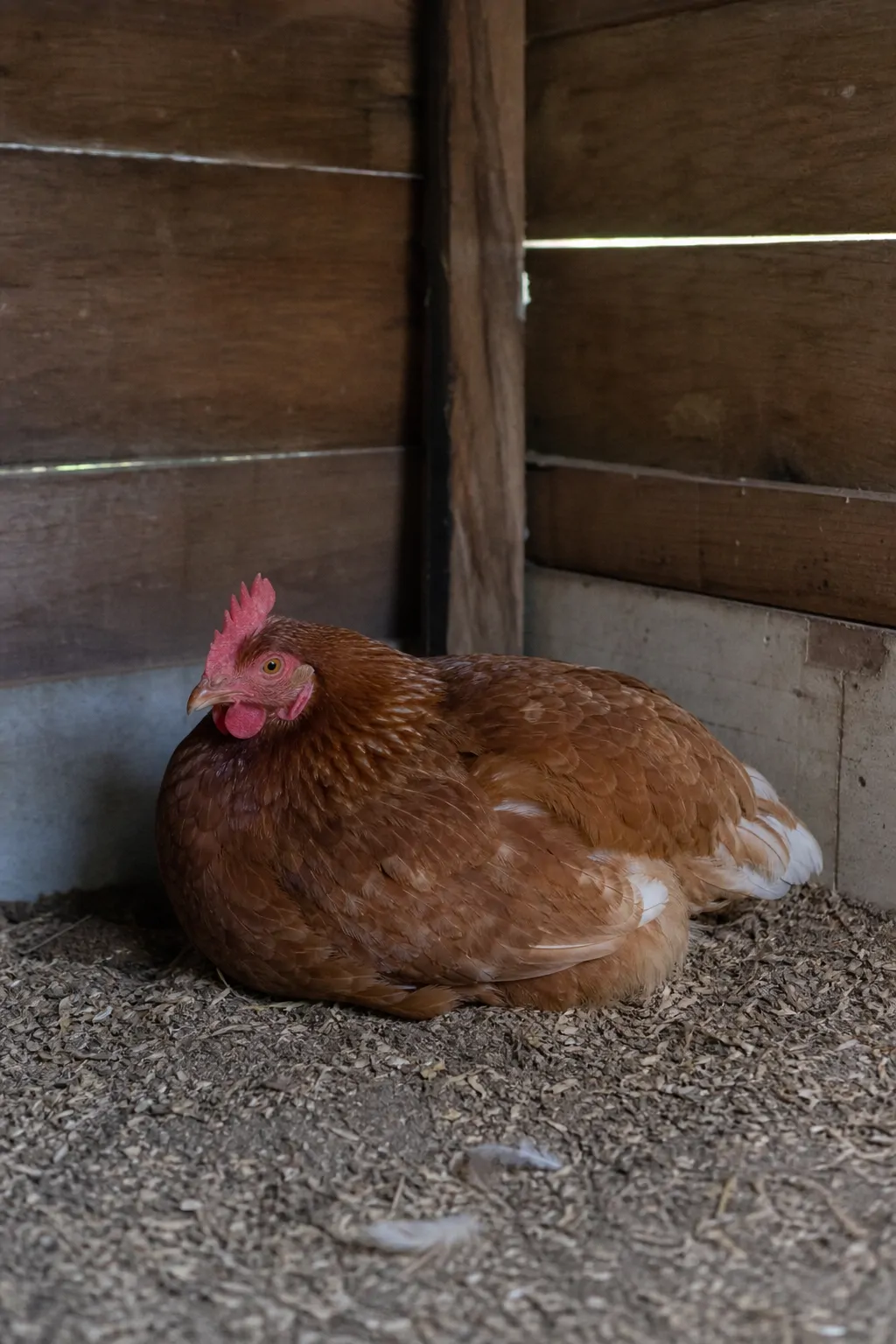
- Lethargy, huddling away from the flock, or reluctance to move is a sign you should consult a veterinarian, particularly if it persists beyond a single cold morning.
- Labored breathing, gurgling, sneezing, or discharge from eyes or nostrils is a sign you should consult a veterinarian, as respiratory disease spreads quickly in closed winter coops.
- A hen straining, standing penguin-like, or repeatedly visiting the nest without producing an egg is a sign you should seek expert help promptly; see also the warning signs described under signs of an egg bound hen.
- Sudden weight loss, a shrunken or bluish comb, or refusal to eat is a sign you should consult a veterinarian.
- Blackened comb or wattle tips, or swollen feet are signs of possible frostbite or infection and should be assessed by an expert.
- Multiple birds dropping off lay abruptly and simultaneously, especially alongside any illness signs is a sign you should contact a veterinarian or extension poultry pathologist rather than waiting for spring.
This page is informational and is not a substitute for veterinary diagnosis. Cold weather can mask early illness because reduced activity looks normal in winter, so any deviation in appetite, droppings, breathing, or posture deserves attention from someone qualified to examine the bird.
Common Mistakes That Undermine Winter Production
Even well-intentioned keepers run into a handful of recurring pitfalls when boosting winter egg production:
- Turning lights on in the evening only. When the bulb shuts off after dark, birds can be caught off the roost in sudden blackness.
- Inconsistent timing. Manually flipping a switch whenever someone remembers defeats the hormonal consistency the system depends on.
- Over-treating. Generous scratch and table scraps dilute protein and calcium precisely when hens can least afford it.
- Sealing the coop tight. Closing every vent to keep birds warm traps moisture and raises frostbite and respiratory risk.
- Assuming the water bowl is fine. Ice forms fastest in the early morning hours when nobody is watching.
- Expecting old hens to perform like pullets. No amount of light restores output that age has already reduced.
Conclusion
So, do chickens lay eggs in winter? Yes — many do, at a reduced rate — and with attention to day length, nutrition, water, ventilation, and flock age, how to keep chickens laying in winter is a realistic goal rather than wishful thinking. If production remains low after working through this checklist, revisit our main guide to egg-laying problems to rule out the non-seasonal causes that can hide behind a winter slowdown.