Chicken Stopped Laying After Moving: Recovery Plan
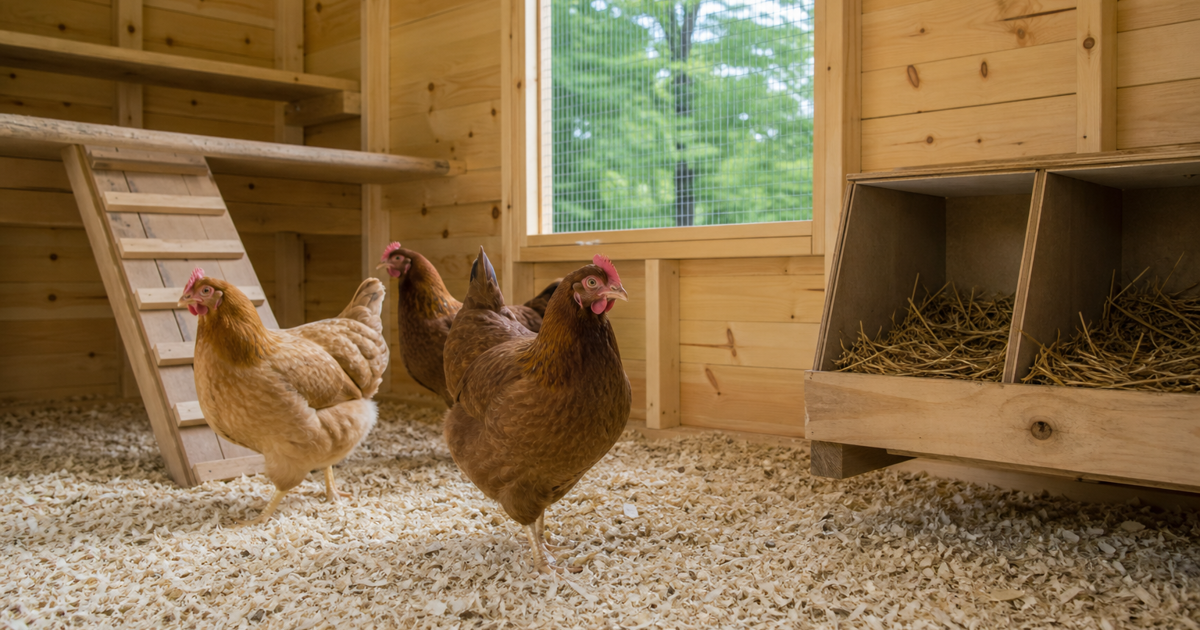
Chicken Stopped Laying After Moving
Few things worry a new flock owner more than opening the nesting boxes for a week straight and finding nothing after a big change of address. Understanding why hens stop laying after relocation matters because the pause is usually predictable, temporary, and heavily influenced by how the first two weeks in the new coop are managed. If you are still working through the full list of possibilities, the broader egg-laying troubleshooting guide covers the other major causes, while this page focuses specifically on the laying disruption after a move and the practical steps that shorten it.
What Actually Happens Inside a Hen When She Moves
Egg formation is not a simple mechanical process — it is a hormonally scheduled event. A hen's reproductive cycle is governed by a chain of signals that runs from the eye and brain to the ovary, and that chain is sensitive to both day length and stress causing egg production drop. Poultry researchers have long documented that when a bird experiences an acute stressor, the adrenal response releases corticosterone, and elevated corticosterone tends to suppress the release of the reproductive hormones that trigger ovulation. In practical terms, the ovary temporarily stops releasing yolks, and the follicles that were already developing may be reabsorbed rather than completed.
This is the core mechanism behind relocation stress flock in chickens. Moving is not one stressor — it is a stack of them arriving at the same moment: catching and handling, confinement in a crate, vehicle motion, unfamiliar smells, a new coop layout, different bedding, a different water source, possibly new flockmates, and almost always a change in the amount and angle of daylight reaching the coop. Any one of those on its own can cause a dip. Together, they frequently cause a complete stop.
It also helps to understand that a hen has essentially no way to distinguish "my keeper moved me to a nicer coop across town" from "a predator event has displaced my flock." From the bird's point of view, the environment has become unpredictable, and reproduction is metabolically expensive. Pausing egg production is a normal, adaptive response — not a malfunction. That is why the goal after a move is not to force laying, but to restore predictability quickly so the hormonal cycle can resume on its own.
Why Some Hens Are Hit Harder Than Others
Age and Laying Experience
How moving chickens to new coop affects egg production varies widely from bird to bird. Pullets that have only recently started laying tend to have a less established cycle and are more likely to shut down completely, and sometimes for longer. Several factors consistently influence the severity of the pause in production during relocation.
Breed Temperament and Transport Duration
Calmer, heavier dual-purpose breeds often resettle faster than flighty, high-strung light breeds, which react more strongly to handling and novelty. A twenty-minute drive with a short crate stay is a smaller insult than a full day in transit with heat, noise, and no feed.
Flock Integrity and Social Stability
Whether the flock moved together matters significantly. Hens moved as an intact group have social stability to fall back on. A single hen rehomed into an established flock faces hen laying stops after house move stress plus the entire pecking-order process.
Seasonal Timing of the Move
A move in late summer or fall can coincide with shortening days or the annual molt, which stacks a second, longer-lasting cause on top of the move itself. Understanding seasonal factors helps predict recovery timelines.
Typical Timeline: How Moving Affects Egg Production
Extension poultry specialists generally describe the settling period after transport as a matter of days to a few weeks rather than months. The table below outlines what keepers commonly observe, along with the management focus for each window. Individual birds vary, so treat this as a general expectation rather than a schedule.
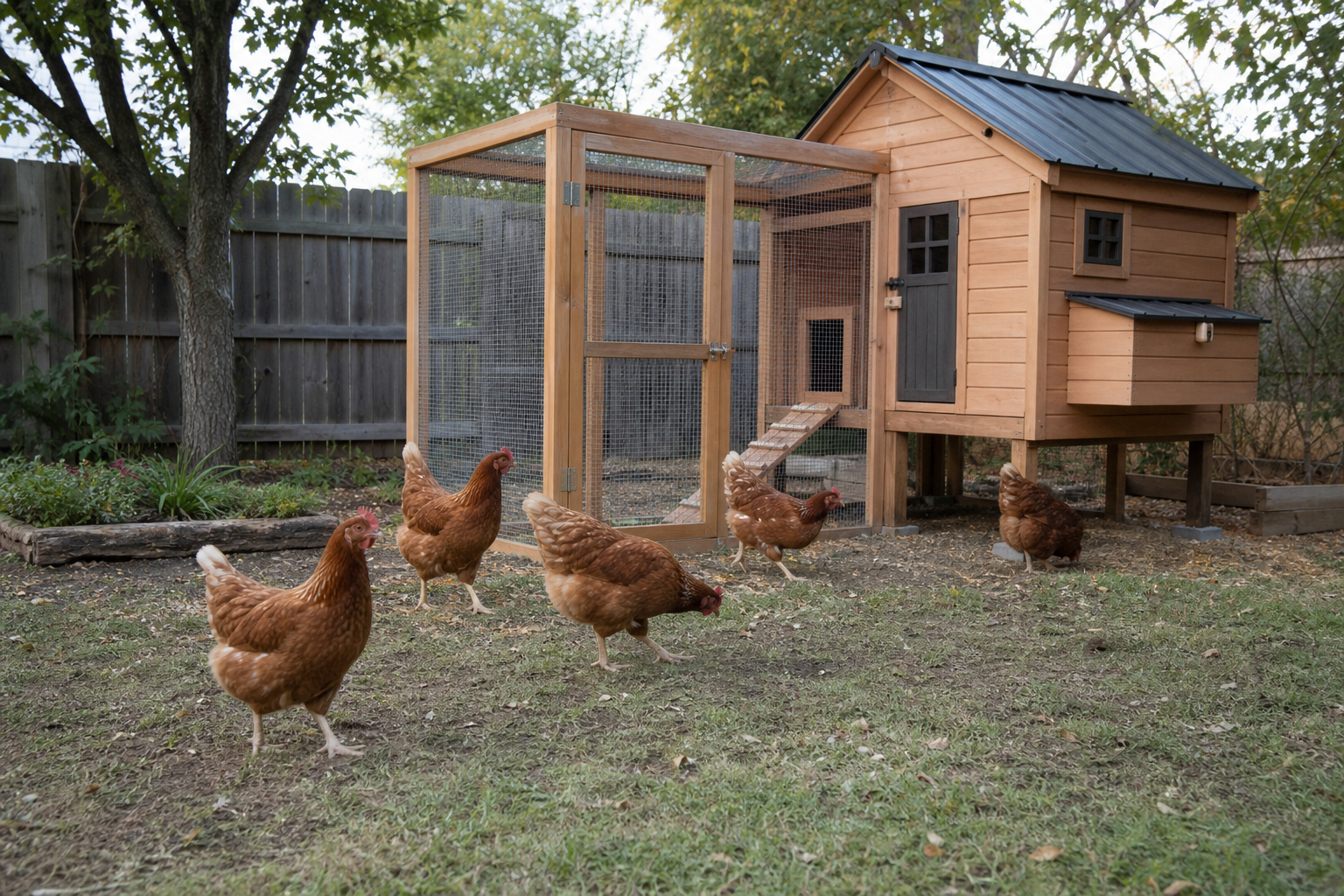
| Time Since the Move | Commonly Observed | Management Focus |
|---|---|---|
| Day 0–2 | Laying usually stops entirely. Reduced feed and water intake, hiding, quiet behavior, hens reluctant to leave the coop. | Confinement to the new coop, constant water access, zero additional changes. |
| Day 3–7 | Feed intake begins to normalize. Birds start exploring, dust bathing, and vocalizing normally. Occasional eggs may appear, sometimes in odd locations. | Nesting box familiarization, daylight audit, calm daily routine. |
| Week 2 | Many hens resume laying, though shell quality and size can be irregular at first. Soft or misshapen eggs are not unusual during restart. | Complete layer ration, free-choice calcium, continued routine. |
| Week 3–4 | Production typically climbs toward the pre-move rate for hens that were laying well before the move. | Record keeping to confirm the trend, gradual reintroduction of range time. |
| Beyond 4–6 weeks | A continued full stop suggests something other than the move alone is involved — season, molt, age, nutrition, parasites, or illness. | Systematic re-evaluation; consult a veterinarian or extension poultry specialist if birds also appear unwell. |
One important caveat: if the hens were purchased or rehomed rather than moved by their original owner, there may be no reliable baseline at all. A seller's estimate of "laying great" is not a measurement. In those cases, the apparent laying disruption after a move may partly reflect a bird that was already off lay before she was loaded into the crate.
Step-by-Step Plan for Helping Hens Adjust After Moving
The steps below are ordered roughly by priority and timing. Each includes the reasoning, because understanding why a step works makes it easier to adapt to a specific setup.
Confine the Flock to the New Coop for Several Days
Keeping hens inside the new coop — or inside a securely attached run — for roughly three to five days does two things. It teaches the birds that this structure is home, which is essential for reliable evening return and for nesting box use. It also limits the number of novel stimuli arriving at once, giving the birds a small, controllable space to map before they take on an entire yard. Releasing hens immediately after transport is the most common cause of birds roosting in trees, hiding under decks, or refusing to enter the coop at dusk. Provide feed and water inside during this period, and resist the urge to "let them stretch their legs" early.
Keep Feed, Water, and Feeder Style Identical at First
Feed changes are their own independent cause of a laying pause, so stacking a new ration on top of relocation stress in chickens doubles the disruption. If possible, obtain a small quantity of the previous feed and blend it into the new one over seven to ten days. Equally important, keep the delivery method familiar. Birds raised on open trough feeders and rubber pans may not immediately recognize a treadle feeder or nipple waterer as a food and water source, and a hen that drinks less will almost certainly lay less. When switching to nipple drinkers, run an open waterer alongside them for the first week.
Recreate Familiar Nesting Conditions
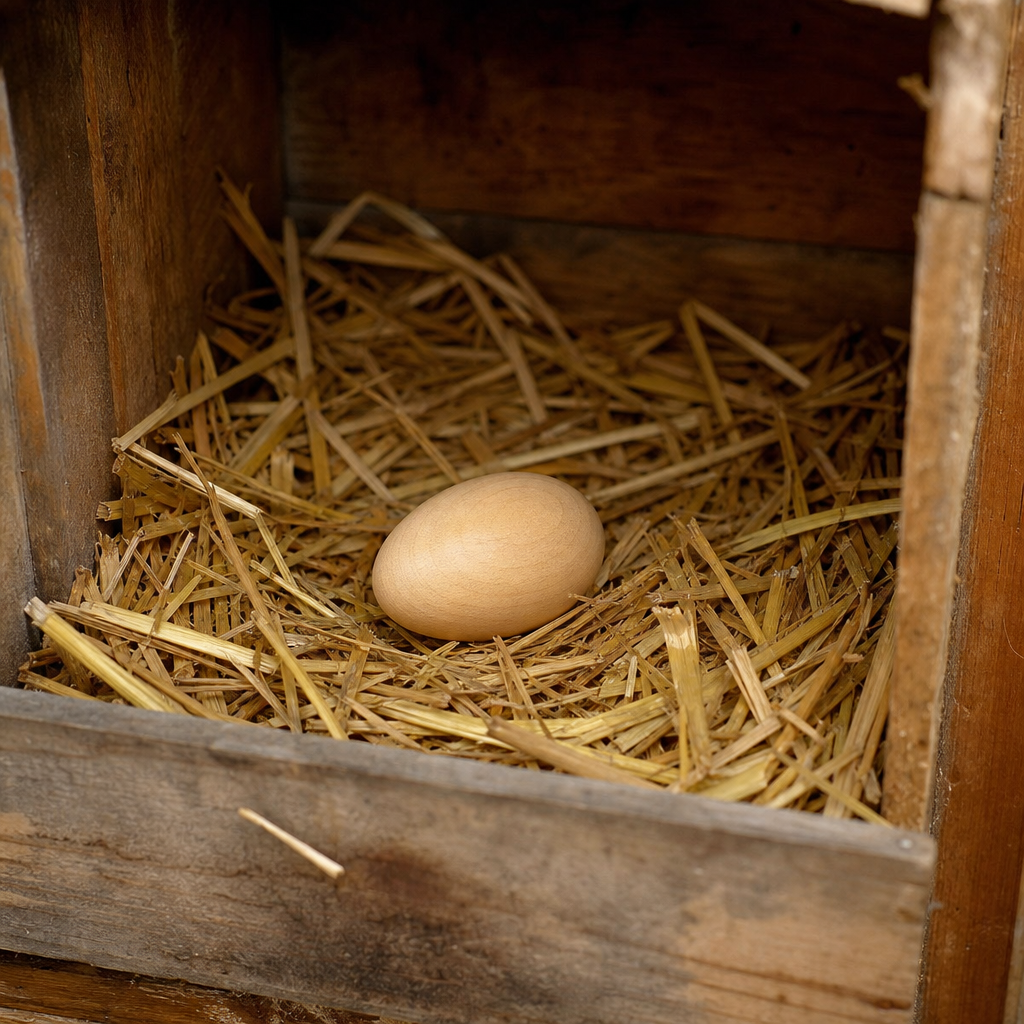
Hens are creatures of habit about where they lay. If the previous coop had straw-filled wooden boxes at floor level and the new coop has elevated plastic boxes with shavings, expect confusion. Practical measures that help include filling boxes generously with soft nesting material, placing ceramic or wooden dummy eggs in each box to signal a safe laying site, keeping boxes dim and somewhat enclosed, and making sure boxes sit lower than the roosts so hens do not choose the roost as the highest sleeping spot and the boxes as an afterthought. Two to four hens per box is a common recommendation; too few boxes creates competition, which is itself a stressor.
Audit Daylight in the New Location
This step is routinely overlooked. A coop that faces a different direction, sits under a large tree, or has smaller windows can deliver dramatically less light than the previous setup, and day length is the single strongest environmental driver of laying. A move in October that also cuts effective daylight from fourteen hours to nine will read like relocation stress but is really a photoperiod problem. Measure or estimate how many hours of usable light the birds actually receive, and compare that with the previous site. Keepers who need to compensate can review approaches to coop lighting guide for layers before adding supplemental light, since timing and gradual introduction matter more than raw brightness.
5. Verify Temperature, Ventilation, and Air Quality
New coops are frequently either too tight or too drafty. Poor ventilation allows ammonia to build from droppings, and ammonia irritates the respiratory tract and depresses appetite. An overly exposed coop, on the other hand, creates chilling drafts across the roost. Both conditions act as ongoing stressors that prevent a hen from settling. Ventilation should be high — above roost level — and generous, while the roosting zone itself stays free of direct drafts. If the coop smells sharp when you first open it in the morning, ventilation and bedding management need attention before egg production can be expected to normalize.
6. Avoid Combining Flocks During the Same Week
Merging new birds with an existing flock during a move compounds two of the largest stressors in chicken keeping. Standard practice is to quarantine incoming birds separately for two to four weeks — which serves biosecurity purposes as well — and then introduce them across a barrier so the groups can see each other before sharing space. Introducing at dusk, providing multiple feeders and waterers, and adding visual barriers or clutter in the run all reduce sustained conflict. A hen at the bottom of a newly forming pecking order may be blocked from feed, water, and nesting boxes, which is a far more durable cause of a laying stop than the move itself. The broader mechanics of this are covered in more detail in the discussion of common stressors that stop laying.
7. Reduce Predator Pressure, Noise, and Foot Traffic
A new property brings new threats and new sounds. Hawks circling a more open yard, a neighbor's dog at the fence line, raccoons testing latches at night, or a coop placed beside a driveway or HVAC unit all keep birds in a state of low-grade alarm. Nighttime disturbances are especially damaging because they interrupt the rest period during which much of shell formation occurs. Walk the perimeter after dark for the first several nights, secure all latches with predator-proof hardware, cover or screen the run if aerial predators are present, and position the coop away from constant human and vehicle activity where possible.
8. Establish a Boring, Repeatable Daily Routine
Predictability is the antidote to relocation stress in chickens. Feeding at consistent times, opening and closing the coop on a consistent schedule, and moving calmly and quietly around the birds all speed recovery. Avoid the temptation to visit constantly to check for eggs; frequent nesting box inspections during the day can discourage hens from settling in to lay. Once or twice daily collection is sufficient in mild weather.
9. Support Nutrition Without Overdoing Treats
A complete layer ration should make up the large majority of intake — commonly cited as around ninety percent — with oyster shell or another calcium source offered free choice in a separate container. During recovery, keepers sometimes flood the run with scratch grains, mealworms, and kitchen scraps in an attempt to "cheer up" the flock, which dilutes protein and calcium exactly when the reproductive tract is restarting. Electrolyte and vitamin supplements in the water for a few days after transport are widely used to support birds through the immediate post-move period. If early eggs come out thin-shelled or shell-less, that is a common restart pattern worth understanding through the guidance on why your hen lays soft-shelled eggs.
10. Search Thoroughly Before Concluding They Have Stopped
Once hens are given yard access, some will lay in a hidden nest rather than the coop — under a shrub, behind a woodpile, inside a shed, or in the corner of a barn stall. A flock that appears to have stopped may simply be laying somewhere else. Keeping birds confined until midday for a week or two is a standard technique for retraining nesting box use, since most hens lay in the morning. Also check for eggs on the coop floor, and note whether any eggs are disappearing entirely, which can indicate egg eating or a predator rather than a laying disruption after a move.
11. Rule Out Causes That Coincide With the Move
Because moves are often scheduled around a season change, a housing project, or a new bird purchase, other explanations frequently overlap. Consider whether the flock is in annual molt, whether birds are three or more years into their laying life, whether day length is shrinking, and whether the birds may have picked up external parasites or internal worms in transit or at the new site. Checking vent feathers and under wings at night for mites and lice is a quick, worthwhile task in the first week. Seasonal overlap in particular is worth reviewing alongside the details on the winter laying slowdown explained, since a fall move and a winter slowdown can look identical from the nesting box.
12. Keep Written Records
A simple daily tally of eggs collected, feed consumed, and anything notable in behavior turns guesswork into evidence. Records make it obvious whether production is trending upward, flat, or falling, and they are extremely useful if a veterinary consultation eventually becomes necessary. Memory is unreliable in a stressful few weeks; a notebook on a nail by the coop door is not.
Completion Checklist
Use the following indicators to judge whether helping hens adjust after moving has been handled thoroughly. When most of these are true, the environment is no longer the limiting factor.
- Hens return to the new coop on their own at dusk and roost calmly.
- Feed and water intake are back to normal volumes, and droppings look normal in form.
- Birds forage, dust bathe, preen, and vocalize freely rather than clustering in a corner.
- Every hen has unobstructed access to feed, water, and at least one nesting box.
- Effective daylight hours at the new site have been measured and compared with the previous location.
- Coop ventilation is adequate, with no ammonia odor and no draft across the roost.
- Feed transition is complete, and a separate free-choice calcium source is available.
- The run and coop have been secured against local predators, including at night.
- The property has been searched for hidden nests, and floor eggs are not accumulating.
- Molt, age, season, and parasites have each been considered and either ruled out or noted.
- A written production log exists covering at least two to three weeks post-move.
When to Consult a Veterinarian or Poultry Expert
A quiet, non-laying but otherwise healthy hen in the first two weeks after a move is a management situation. A hen showing physical signs of illness is a different matter, and self-diagnosis is not appropriate for any of the following. Each of these is a sign you should consult a veterinarian experienced with poultry or a state extension poultry specialist:
- Lethargy, a hunched posture, or a hen standing apart from the flock with closed eyes — a sign warranting professional evaluation rather than home treatment.
- A pale, shrunken, or bluish comb and wattles — a change in comb color and condition is a sign you should consult an expert.
- Straining in the nest, repeated unproductive nesting, a penguin-like upright stance, or a swollen abdomen — these are signs that warrant prompt veterinary attention; readers can learn what to watch for through the guidance on signs of an egg bound hen, but confirmation and treatment belong to a veterinarian.
- Labored breathing, open-mouth breathing, gurgling, sneezing, or nasal or eye discharge — respiratory signs following transport are a reason to seek professional guidance quickly, particularly where new birds have been introduced.
- Persistent watery, bloody, or foamy droppings — a sign you should consult a veterinarian rather than reach for a home remedy.
- Continued refusal to eat or drink beyond about forty-eight hours after arrival — sustained anorexia is a sign requiring expert assessment.
- Multiple birds affected at once, or any sudden death in the flock — a situation for immediate professional consultation, and one where a state diagnostic laboratory may be the appropriate resource.
- Visible wounds, limping, or an inability to reach feed and water because of flock aggression — separate the bird and seek advice on wound management.
It is also worth contacting an expert when a flock of prime-age hens remains completely off lay six or more weeks after a move despite good body condition, adequate light, correct feed, and a settled environment. At that point the question has shifted away from the move and toward nutrition, parasites, reproductive disease, or something environmental that has not yet been identified — and a professional can order the tests a keeper cannot perform at home.
Practical Expectations Going Forward
Understanding how moving affects egg production makes the pause much easier to sit through. In most well-managed cases, the flock is drinking and eating normally within two or three days, exploring confidently within a week, and producing again somewhere between the second and fourth week. Shell quality, egg size, and yolk consistency may be uneven for the first several eggs, which reflects a reproductive tract coming back online rather than a lasting problem. Rushing the process with extra treats, extra handling, or extra light introduced abruptly tends to slow it down.
The single most useful mindset is to treat the first two weeks as a stability project rather than an egg project. Every decision that reduces novelty, competition, and disturbance shortens the laying disruption after a move, and every additional change extends it. Keepers who resist the urge to reorganize the coop, add birds, switch feed brands, and start free-ranging all in the same week consistently report faster recovery.
In short, why hens stop laying after relocation comes down to a hormonal stress response layered on top of environmental changes in light, feed, housing, and social structure — and the fix is a calm, consistent, predictable few weeks rather than any single intervention. If eggs still have not returned once the flock is clearly settled, the cause is likely elsewhere, and a systematic review of the other common explanations is the logical next step.