Chicken Coop Door Size: Pop Door Dimensions That Work
Chicken Coop Door Size: Pop Door Dimensions That Work
Getting the pop door right is one of those details that seems minor until it isn't. A door that's too small forces birds to squeeze through single file, creating bottlenecks at dusk when everyone wants in at once. A door that's too large invites drafts, wastes coop wall space, and can give predators an easier opening to exploit if the latch ever fails. Chicken coop door size sits at the intersection of bird comfort, security, and daily convenience, which is exactly why it deserves more thought than most builders give it.
This guide walks through the practical numbers behind pop door dimensions, how door height and threshold placement affect flock behavior, and how sizing decisions change depending on breed, flock size, and whether you're planning to add an automatic door later. Anyone designing a new coop, retrofitting an old one, or troubleshooting a stubborn traffic jam at the henhouse entrance will find concrete guidance here rather than vague rules of thumb.
How to House Chickens comfortably starts with entry points that match the birds using them, and that's a detail worth getting right the first time rather than rebuilding later.
Standard Chicken Coop Door Size and Pop Door Dimensions
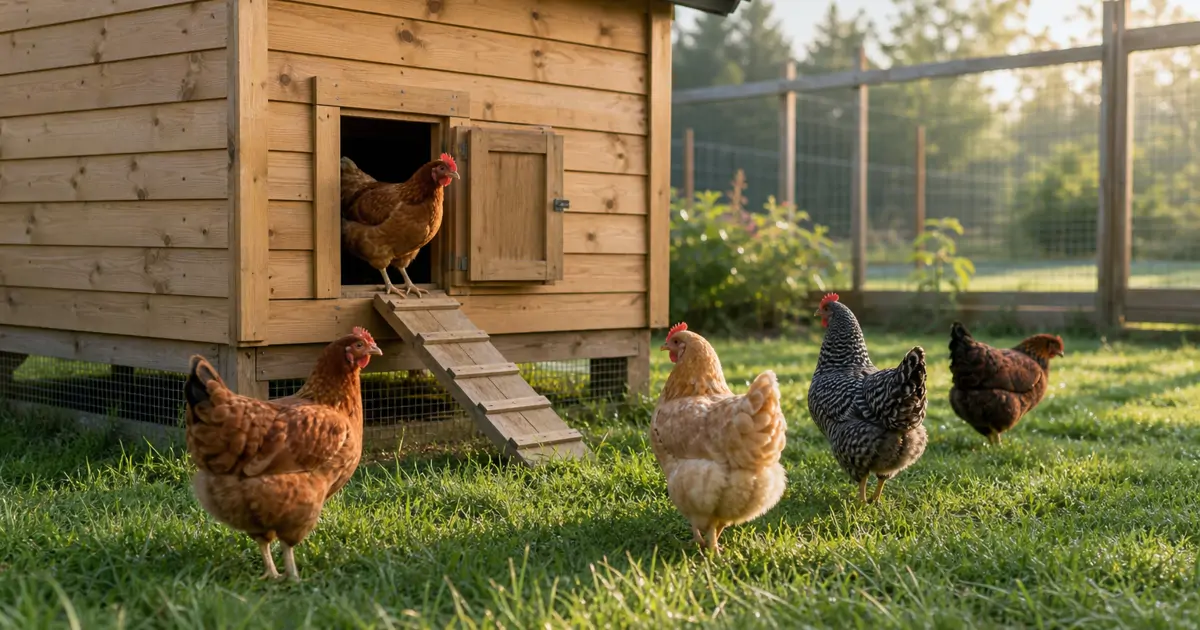
Most backyard coops use a pop door somewhere between 10x12 inches and 12x16 inches. That range accommodates the vast majority of standard-sized laying breeds without wasting wall space on an opening larger than necessary. For a flock of full-sized birds like Rhode Island Reds, Plymouth Rocks, or Australorps, a 12-inch-wide by 14-inch-tall opening tends to work well in practice, allowing a hen to walk through upright without ducking or squeezing her wings against the frame.
Bantam breeds and smaller flocks can get by with something closer to 8x10 inches, though there's rarely a strong reason to go that small unless space is genuinely tight. Many keepers find it easier to build one size that fits the largest bird in the flock, since a door sized for bantams becomes a problem the moment a full-sized breed gets added later. Chicken door sizing isn't just about the average bird — it's about the largest one that has to fit through comfortably, every single day, often while carrying a bit of extra weight during broody season or after a good foraging afternoon.
One detail that's frequently overlooked: door size for chickens should account for two birds occasionally trying to pass at once. During the evening return to roost, dominant hens sometimes push past subordinates rather than waiting their turn. A door with a few extra inches of width reduces the pileups and pecking that come with a narrow chokepoint, particularly in flocks with an established, and sometimes tense, pecking order.
Takeaway: aim for a pop door sized to your largest bird plus a small margin, generally in the 10x12 to 12x16 inch range, rather than the tightest opening that technically works.
Coop Door Height, Placement, and Ramp Design
Door height and placement affect far more than whether a chicken can fit through. Where the opening sits relative to the coop floor and the ground outside determines how easily birds move in and out, how much bedding gets kicked out during exit, and how vulnerable the opening is to weather and predators.
Threshold Height and Predator Gaps
A threshold that sits too low lets bedding spill out with every gust of wind or enthusiastic scratch, while one that's too high forces older or heavier birds to hop awkwardly, which can lead to minor leg strain over time. A threshold of roughly two to four inches above the coop floor strikes a reasonable balance — high enough to contain litter, low enough that birds step over it without effort. This detail matters more for aging hens or heavier meat-type breeds that don't jump as readily as younger, lighter birds.
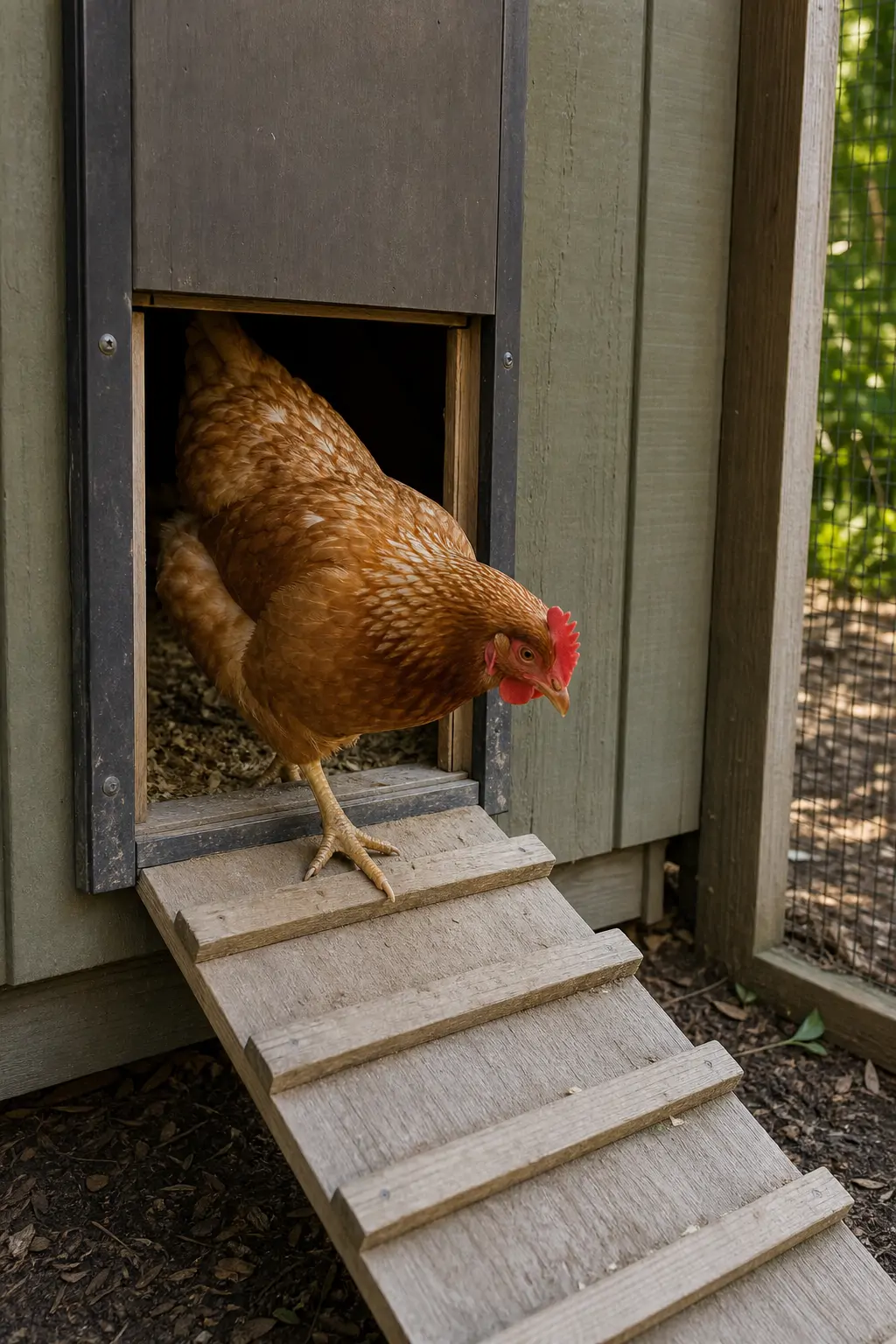
Gaps around the door frame deserve just as much attention as the opening itself. A door that closes flush against a warped frame, or one where the track has widened slightly over a season of use, can leave a half-inch gap that a raccoon's hand or a weasel's narrow body exploits without much effort. Checking the fit of the closed door against the frame every few months is a small habit that prevents a serious problem.
Ramp Angle and Traction
If the pop door sits elevated above ground level, a ramp bridges the gap, and its angle matters more than most builders expect. A ramp steeper than roughly 40 degrees becomes difficult for chickens to climb confidently, especially bantams, older hens, or birds recovering from an injury. Adding horizontal cleats every three to four inches gives birds solid footing and reduces slipping, particularly when the ramp is wet or frosted over. A poorly designed ramp next to a well-sized door effectively cancels out the benefit of getting the door dimensions right in the first place, since birds will hesitate or avoid using it altogether.
Takeaway: coop door height and threshold design influence daily usability just as much as the width and height of the opening itself, so plan the approach path, not just the doorway.
Sizing for Flock Size, Breed, and Automatic Doors
Door sizing isn't one-size-fits-all, and larger flocks bring different pressures than a backyard setup with four or five hens. When you're deciding chicken coop size requirements alongside door placement, it helps to think about traffic flow the same way you would for a busy household entryway — the more birds using it, the more the bottleneck effect matters.
Matching Door Size to Your Flock
The table below offers a general starting point, though local predator pressure, climate, and coop layout can shift these numbers slightly in either direction.
| Flock Situation | Recommended Pop Door Size | Notes |
|---|---|---|
| Small flock (2-6 standard hens) | 10 x 12 inches | Adequate for most standard breeds without crowding |
| Medium flock (7-15 standard hens) | 12 x 14 inches | Reduces evening bottlenecks at roosting time |
| Large flock (16+ standard hens) | 12 x 16 inches, or two separate doors | Two smaller doors often outperform one oversized opening |
| Bantam-only flock | 8 x 10 inches | Smaller opening reduces heat loss in cold climates |
| Mixed standard and bantam flock | 12 x 14 inches | Sized for the largest bird, not the average |
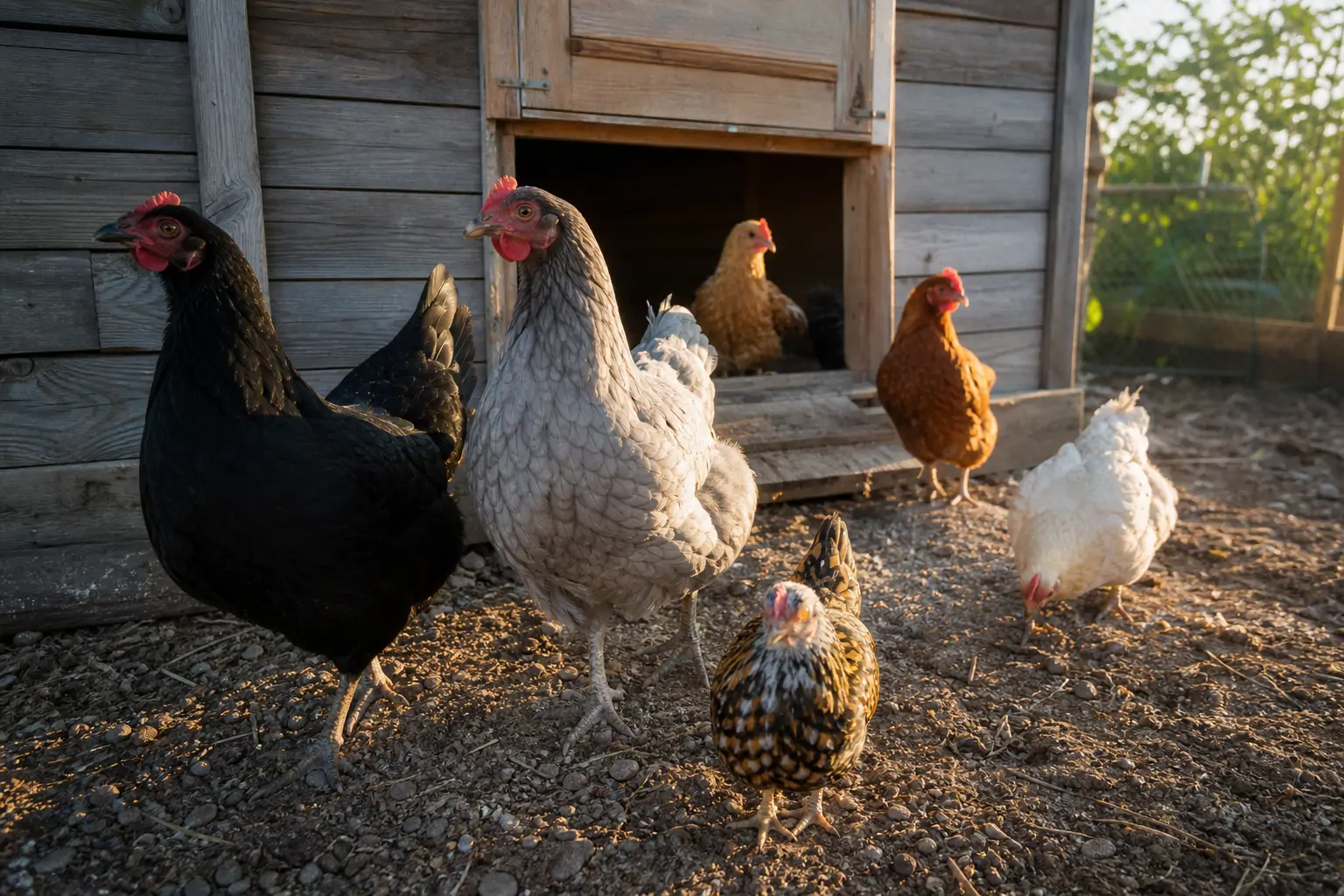
Larger flocks often benefit from two smaller doors placed on opposite sides of the coop rather than a single wide opening. This spreads out traffic, reduces the guarding behavior some dominant hens display at a single chokepoint, and gives keepers flexibility if one door needs to be closed off temporarily for repairs or predator concerns.
Common Mistakes When Sizing a Pop Door
A recurring mistake among first-time coop builders is sizing the door for the flock they have today rather than the flock they might have in two years. Adding a couple of larger breed birds to a flock built around bantams often means the original door becomes a daily squeeze. Another common issue is placing the door directly opposite the coop's main ventilation openings, which can create a wind tunnel effect that chills the interior even when the door itself is closed properly. Chicken coop ventilation design and door placement should be planned together, not as separate afterthoughts, since airflow patterns change significantly depending on where the door sits relative to vents and windows.
A third mistake involves automatic door hardware. Chicken coop door size needs to match the opener's frame dimensions exactly, and retrofitting an automatic chicken door opener onto a hand-built opening sometimes reveals a half-inch mismatch that requires reframing the entire doorway. Checking the manufacturer's size specifications before finalizing coop dimensions saves a frustrating rebuild later. Many automatic units are designed around a handful of standard openings, so building to one of those common sizes from the start keeps future upgrades simple.
Takeaway: size the door for future flock growth and equipment compatibility, not just the birds and hardware you have on hand right now.
Getting pop door dimensions right isn't a matter of guesswork or copying whatever size a neighbor used. It comes down to matching the opening to the birds that will actually use it, positioning it so bedding stays put and predators stay out, and thinking a step ahead about flock growth or future automation. A well-planned entry point, paired with thoughtful chicken run design ideas and a secure predator proof run beyond it, does more for flock safety and daily convenience than almost any other single coop feature.
Whether starting from scratch or adjusting an existing structure, the door is worth revisiting any time the flock composition changes. A few extra inches of width, a slightly lower threshold, or a properly angled ramp can turn a daily chore into a smooth, low-stress routine for both the birds and the person doing the coop chores.